




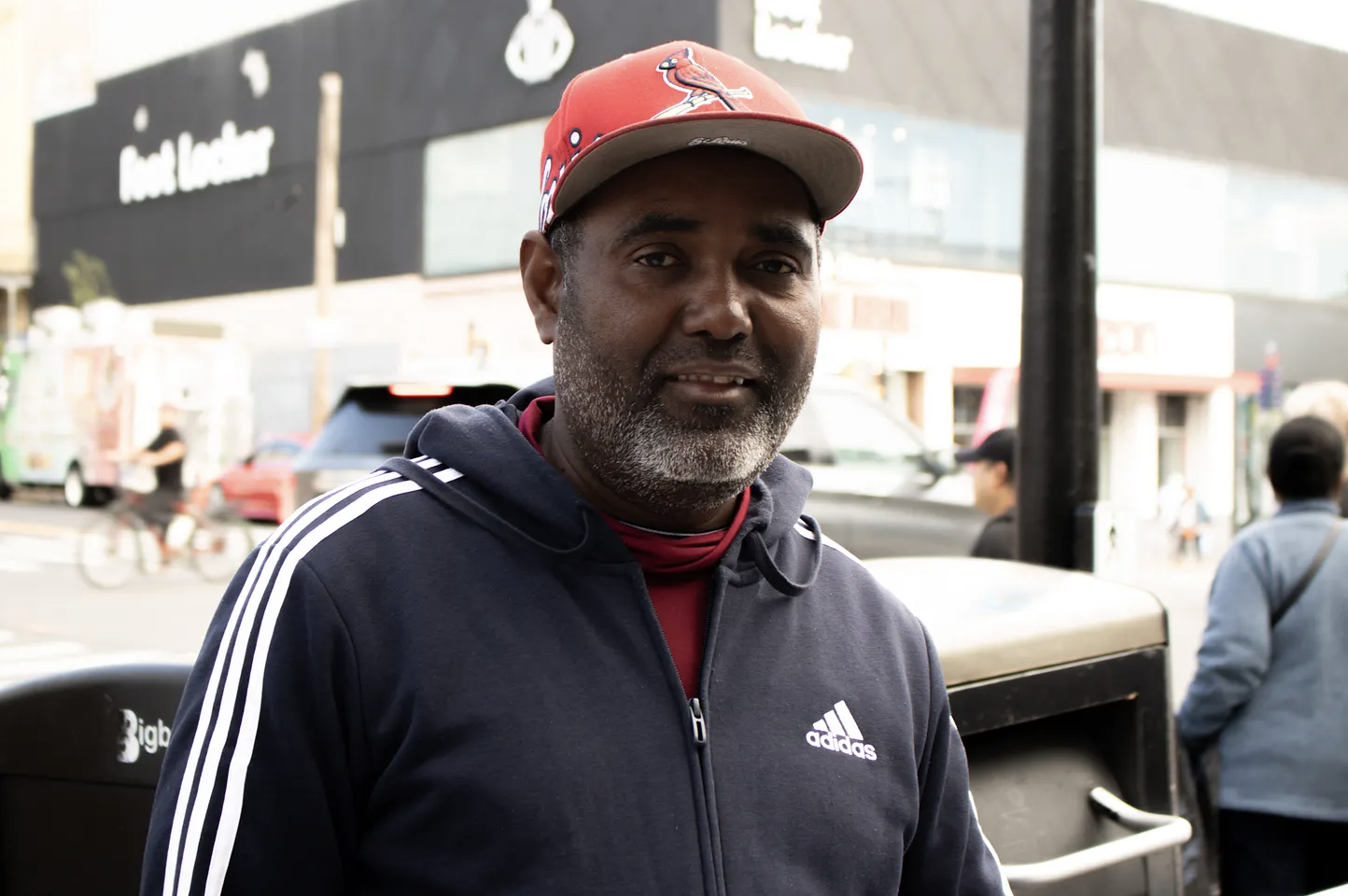
Melvin Jiménez Solano, a Dominican immigrant, has sold toiletries on Fordham Road in the Bronx for 10 years. (Credit: Nicole Williams)
“Observed selling Toothpaste and Mouthwash.”
That’s what a New York City Sanitation officer wrote on a $1,000 ticket for selling food without a permit, issued to Melvin Jiménez Solano, a Dominican immigrant who sells everything from Dove bar soap to Old Spice deodorant at his tables on Fordham Road, a major thoroughfare in the Bronx.
“This isn’t food,” Jiménez Solano said with a laugh, holding up a fluorescent blue bottle of mouthwash. “I’ve never eaten Listerine.”
The ticket was one of three he got in 15 minutes one afternoon last April. It is one of nine he has received since 2023, according to city records. He appeared at a July hearing on the latest ticket and is still awaiting a decision.
Now that ticket could help him get an official vendor’s license–or cost him one.
Vending tickets like Jiménez Solano’s can now count as proof that a vendor has been selling, which can earn them priority on a new waitlist for licenses that the Department of Consumer and Worker Protection will open Nov. 2. The expansion raises the number of licenses from 853 to as many as 11,353.
But the law also provides grounds for the agency to deny a license to people with unpaid fines.
Under a new city rule, effective Oct. 29, vendors who can prove they’ve been selling since January 2025 can move to the front of the line. Acceptable proof includes date-stamped photos, wholesale receipts, letters from community leaders – and civil or criminal summonses.
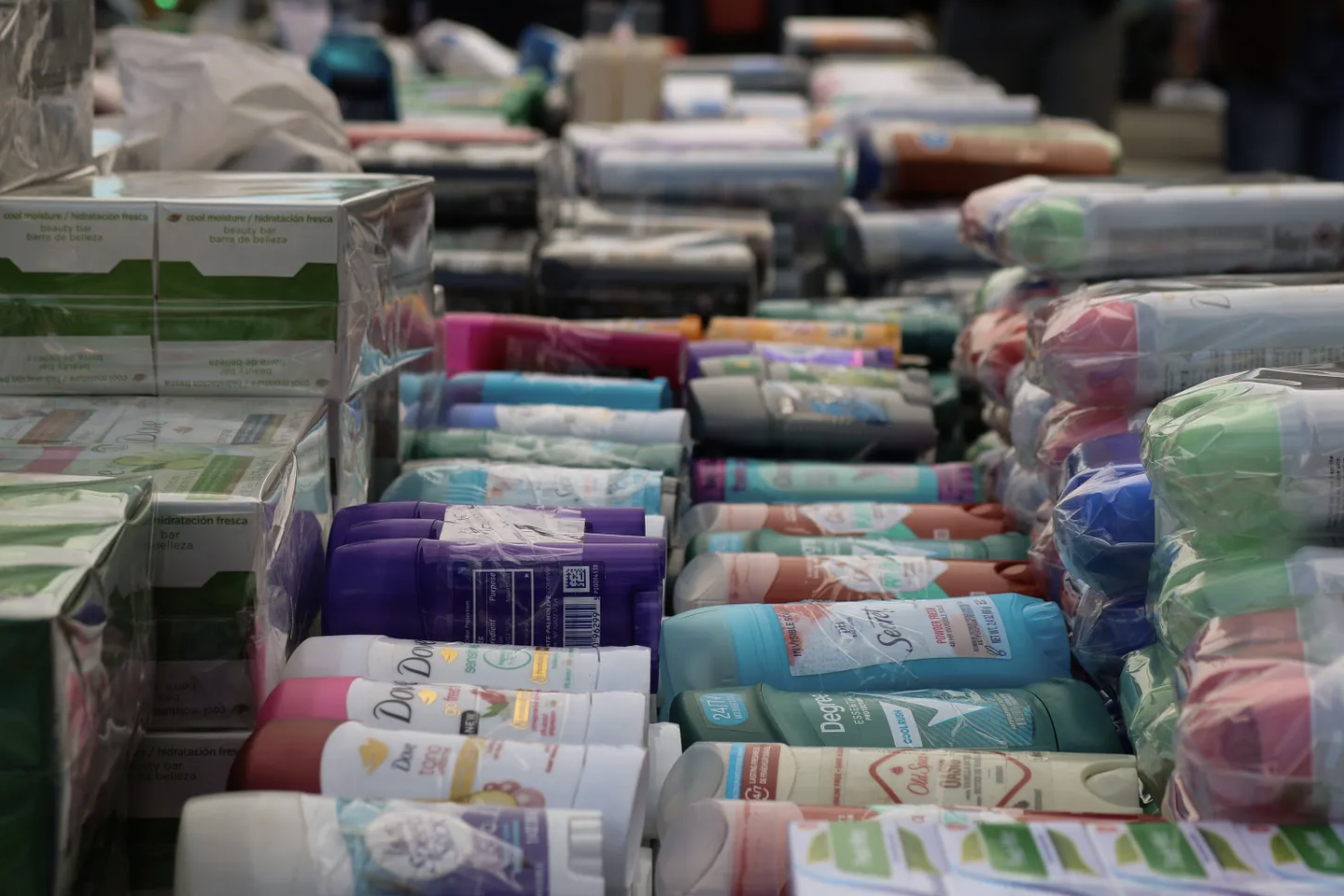
Deodorant and bar soap sit on Melvin Jiménez Solano’s table in the Bronx on Thursday, Oct. 8. In April, a Sanitation officer ticketed him for selling food without a permit. (Credit: Nicole Williams Quezada)
However, the city’s administrative code states that the commissioner “may refuse” to issue or renew a license if an applicant has “unsatisfied fines or penalties.” Asked to explain the discrepancy, a spokesperson at DCWP declined to comment.
The agency has a great deal of discretion, said Daniel Feldman, a professor of administrative law at the John Jay School of Criminal Justice.
“The bottom line is, they can pretty much do what they want.,” Feldman, said. “I could see the commissioner saying ‘Yeah, they have these unpaid fines, but these are tough businesses. We want them to be successful, let’s give them a fresh start.’”
But appealing a DCWP decision is a longshot, he said. A court would overturn the department’s decision only if it were “arbitrary and capricious.”
City records indicate that there are more than $5.5 million in unpaid vending-related tickets going back to 2016. Overall, civil vending summonses climbed to more than 4,600 in April through June of this year, a 28% increase from the same period last year and the highest quarter in at least a decade.
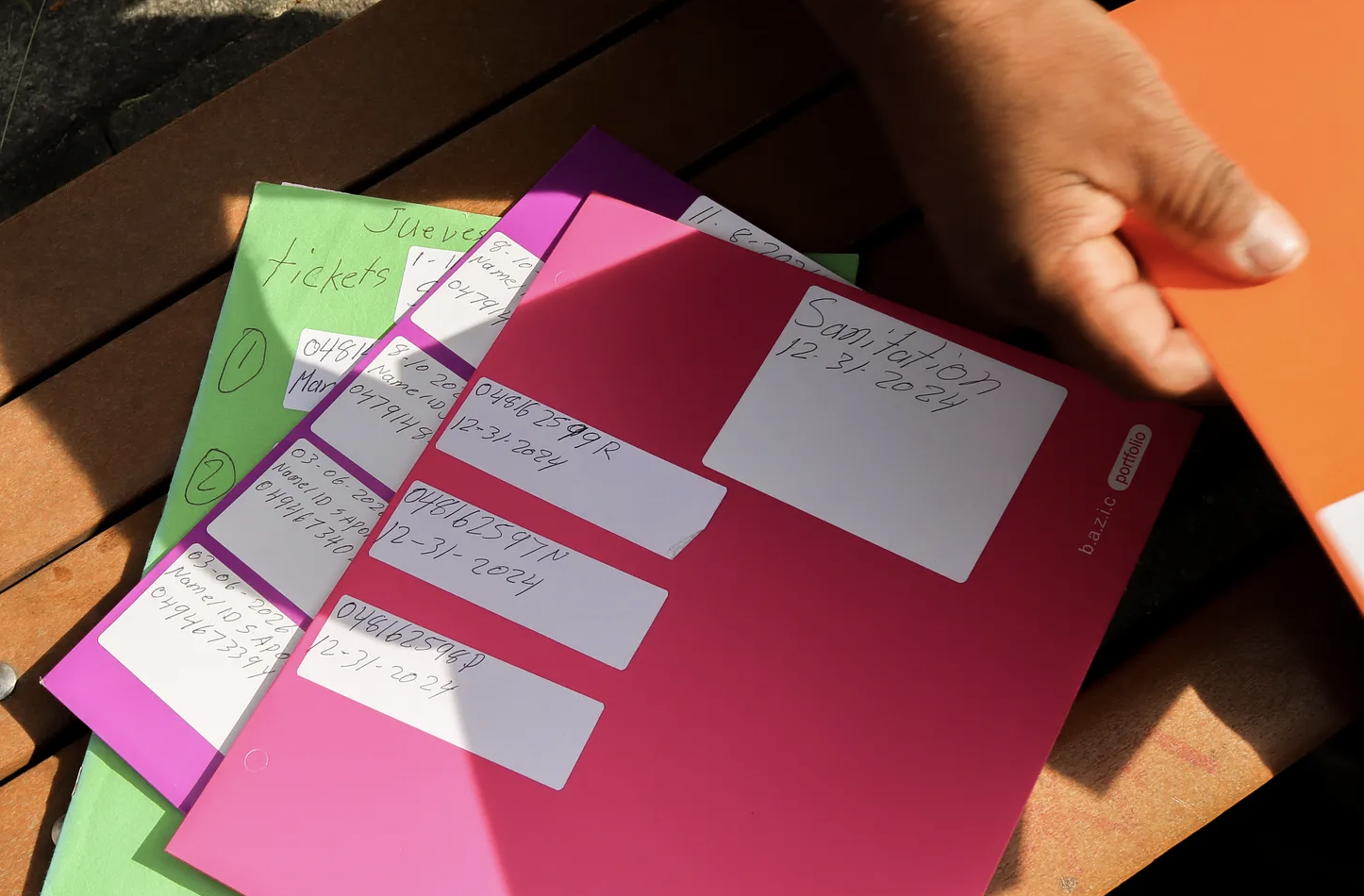
Miguel Varela Sarmiento tracks his vending tickets in hand-labeled folders. He owes $2,775 in unpaid fines, according to city records. (Credit: Nicole Williams Quezada)
That number includes Miguel Varela Sarmiento, who sells scarves, hats and toys on Westchester Avenue in the Bronx, a 4-mile east–west street in the Bronx. He has been issued 28 vending-related tickets since 2010, according to city records, most recently in September for allegedly vending without a license.
He owes $2,775 in unpaid fines, some dating back to 2016.
“I used to work nine hours,” he said. “Now I work one to two hours, and sometimes I can’t work, because Sanitation comes.”
On a good day, he makes $50 to $100 in revenue, which is around half of what it was a few years ago. He struggles to pay for his rent and food, and said he isn’t in a position to pay off past tickets.
“I lost my apartment,” he said. “Now, thank God, a friend gave me a little room.”
Varela Sarmiento said that getting a license would be like winning the lottery; he hopes to get on the waitlist when it opens in November.
That “would mean not being stressed, anxious or constantly worried about Sanitation,” he said. “I could work eight hours. It would change everything for me.”
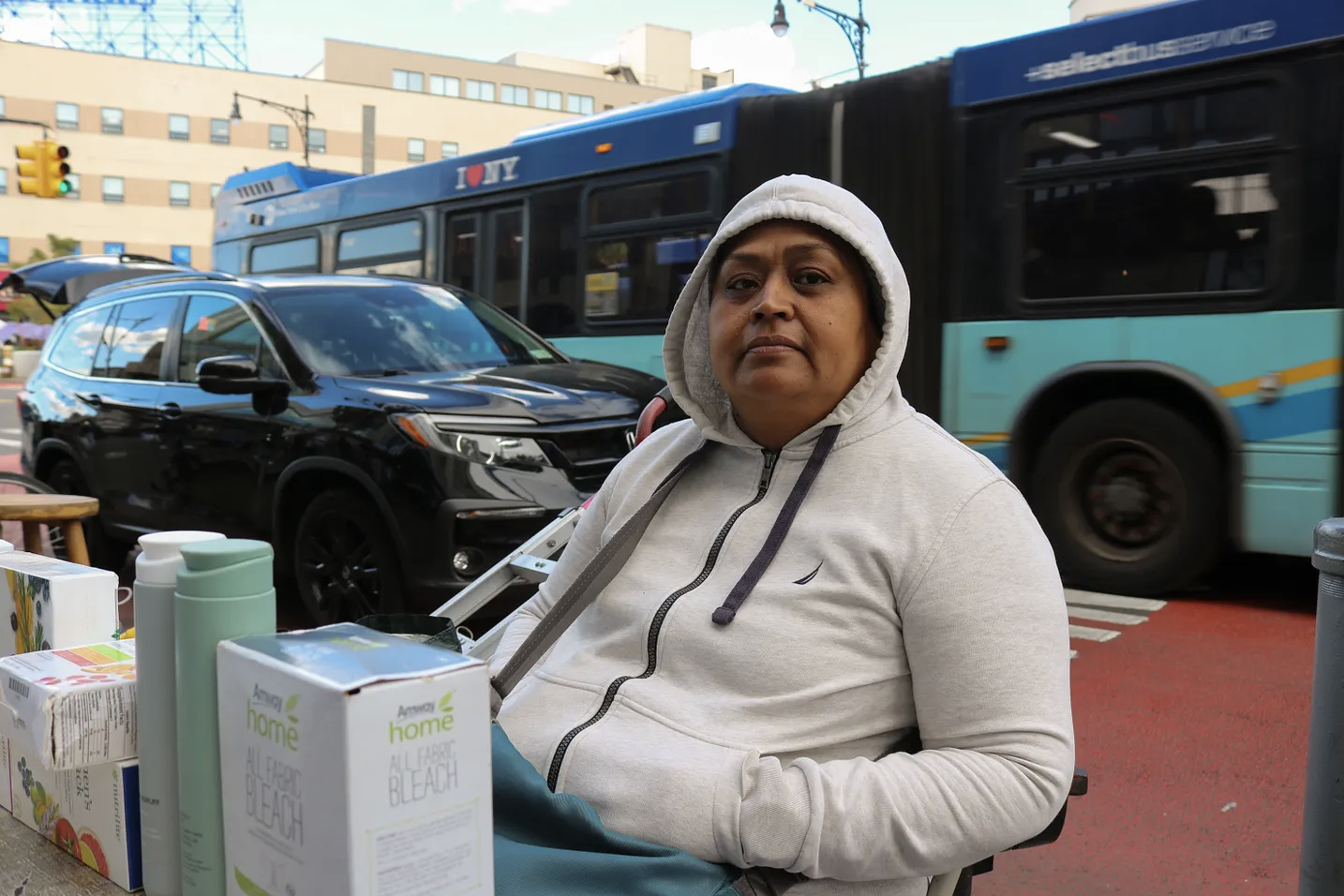
Macrina Navarrete on Oct. 8, 2026, in the Bronx. Navarrete sells Amway products, including vitamins and toothpaste. (Credit: Nicole Williams Quezada)
Macrina Navarrete sells toothpaste, vitamins and other wellness products on Fordham Road. In April, she was issued four tickets by Sanitation. Two were for the location where she was vending ($25 each), one for selling food without a permit ($1,000), and another for selling food without a license ($1,000).
The toothpaste and vitamins were classified as “edible consumables,” according to the summons.
Navarrete said she argued with the officer at the time.
“I told him, ‘You’re giving me a ticket for food, but toothpaste isn’t food. You don’t eat it,’” she said. The officer told her that because toothpaste goes in the mouth, they consider that food.
The city’s administrative code defines food as “any raw, cooked or processed edible substances, beverages, ingredients, ice or water used or intended for use or for sale in whole or in part for human consumption.”
Navarrete has not paid off the four tickets from April, which total $2,050. She said she received two more tickets of a similar nature and amount last year and believes those fines are still pending.
Navarrete and Varela Sarmiento said they were assured at a meeting with the Street Vendor Project, a membership-based organization that provides legal assistance and training, that their fines would not affect their applications.
“There’s confusion about that,” Navarrete said, “because now it seems they’re saying it will affect the application.”
Navarrete knows the risk she takes by selling without a license.
“You’re aware you’re breaking the rules,” she said. “You know the risk you’re running.” She worries that the fines are accruing interest as they go unpaid.
On the city’s online payment system, older unpaid tickets carry a note: “Additional interest may apply.” The note doesn’t say how much. Navarrete’s tickets from April do not include that note.
Jiménez Solano said selling is his only income. These days he makes $300 to $400 in revenue on a good day, down from $800 two years ago.
“If I stop working, I can’t pay the bills or support my family,” said Jimenez Solano, who has two young children.
He is still waiting on a decision about his ticket, but plans to go back before the judge, before the waitlist opens.
“Me preocupa,” he said. It worries me.
“No esta claro.” It isn’t clear.
He’ll apply anyway.
About the author(s)

Nicole Williams Quezada is a bilingual journalist and M.S. candidate at Columbia Journalism School's Stabile Center for Investigative Journalism.