



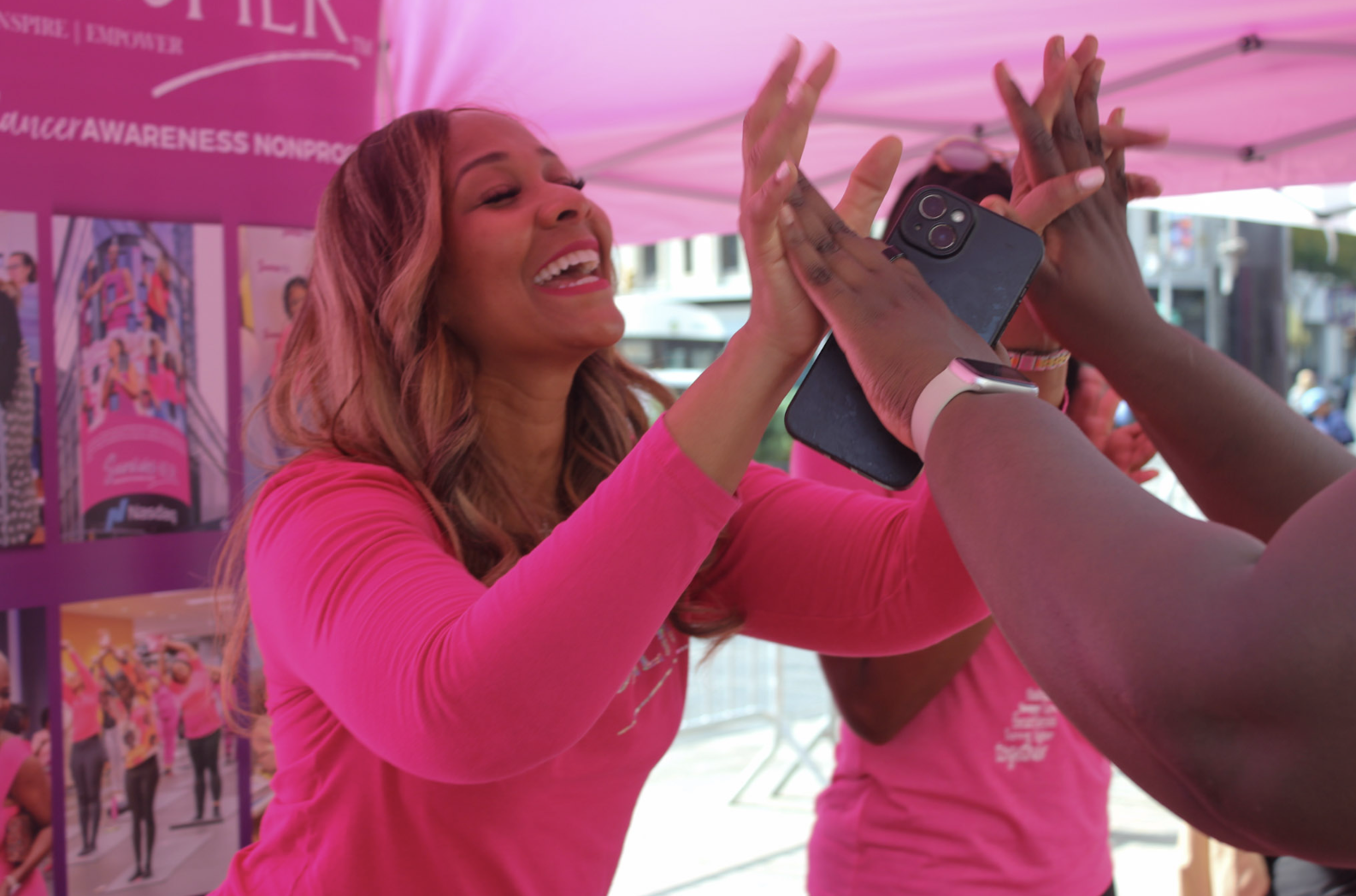
Lyndsay Levingston, breast cancer survivor and founder of SurviveHER. (Credit: Ana Federica Wallis)
At 37, Lyndsay Levingston wasn’t due for her first mammogram for another three years. Still, when she found a lump in her breast, she was concerned. Tests and scans confirmed a diagnosis of 2B triple-negative breast cancer, one of the most aggressive kinds. A year later, after fifteen rounds of chemotherapy and a double mastectomy, Levingston is cancer free.
Many Black women aren’t that lucky. According to the American Cancer Society,
Black women are 5% less likely to get breast cancer than white women, but nearly 40% more likely to die from it.
On Oct. 10, a pink-clad crowd filled the plaza outside Adam Clayton Powell Jr. State Office Building as survivors, health providers and advocates worked to shrink that number. Music played from the speakers, pink ribbons were pinned to shirts, and a panel of survivors spoke from a stage at the center of the plaza.
For six years, the National Black MBA Association, along with the nonprofits SurviveHER and AfroPink, have hosted The Pink Party on the Plaza, a breast cancer awareness event. Around 500 women moved between tents to learn about insurance options, how to do self-exams, and sign up for free breast screenings.
The alarming disparity in outcomes can be at least partially explained by a diagnosis gap. Black women are more likely to be diagnosed after the cancer has already spread, when it’s much harder to treat. Often, advocates say, what keeps women away from medical professionals is fear.
“They consider breast cancer to be a fatal diagnosis, and so they’d rather not know,” said Levingston, founder of SurviveHER. “And that’s what’s contributing to late-stage diagnosis.”
For some, getting screened isn’t that accessible. It means taking time off work, dealing with insurance issues, or traveling to a clinic that might be in a different neighborhood. That’s why the organizers bring the party to the street. They chose the plaza on 125th Street, the heart of Harlem’s busiest corridors, to reach passersby.
“They weren’t even planning to get a breast scan that day, but they got a breast scan because we were literally out there in the community at the right time and at the right moment,” said Vina Morris, a two-time breast cancer survivor and founder of AfroPink.
Tary Hernandez, a 31 year-old dance teacher was one of them. “I was in the neighborhood,” she said. She signed up for her first BEXA – a radiation free scan, and left with a stack of pamphlets for the mothers at her dance studio, one of whom is going through chemotherapy.
“We simply want to educate,” said Levingston. “We hope that women will come out of this event informed, inspired, and empowered to take action as it relates to their breast health.”
Vonetta Hawkins, 51, gets screened at the event every year. Last year, she said, a friend practiced a self exam with a model with a lump in it. Because of that, her friend was able to later recognize a lump in her own breast.
“It saved her life,” said Hawkins. “What’s here today is priceless.”
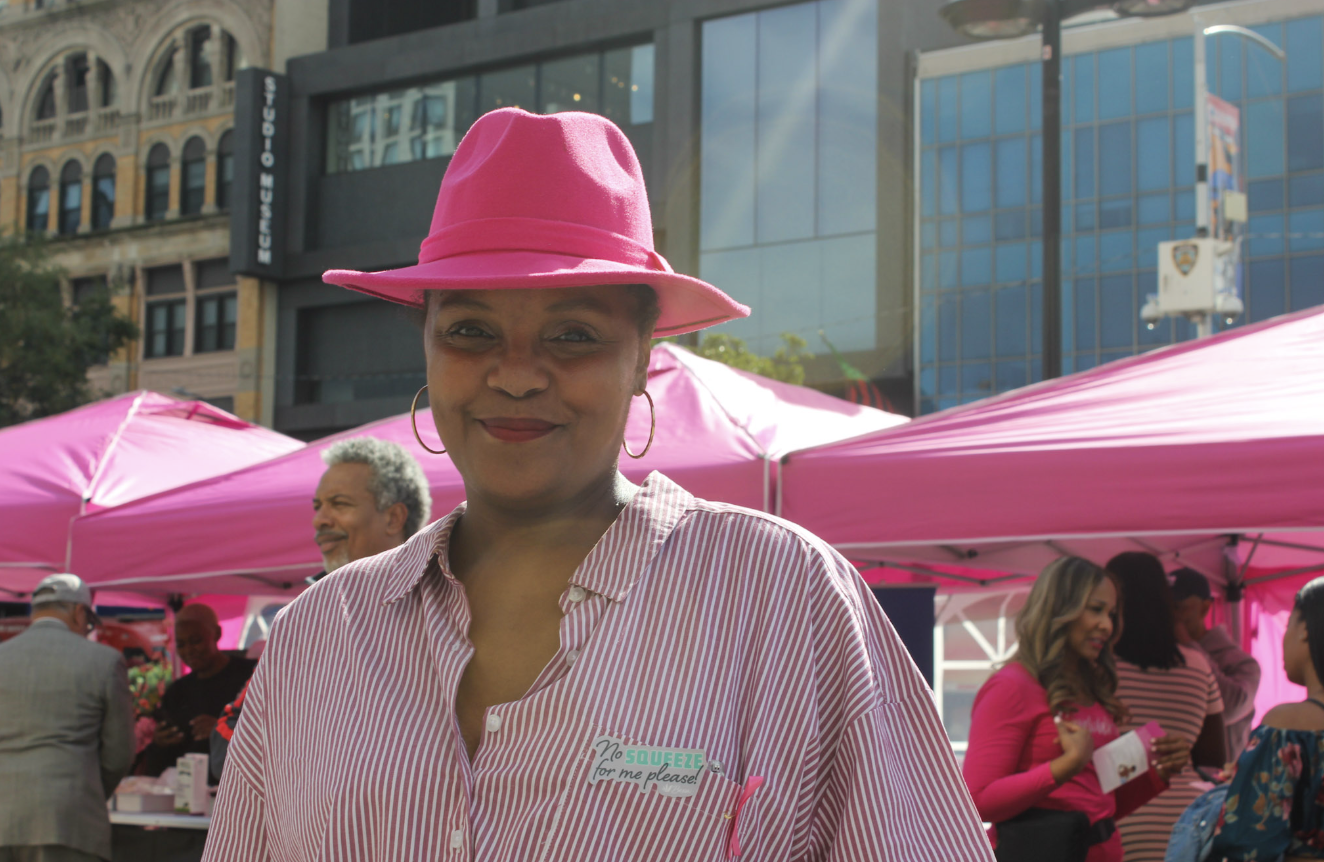
Vonetta Hawkins gets free breast screening at the event every year. (Credit: Ana Federica Wallis)
New York has tried to take costs off the table for women. Since 2017, state law has required most insurers to cover mammograms and follow-up imaging with no out-of-pocket costs, and uninsured women can get free screening through state programs. But many women still don’t know that, some employer plans aren’t covered, and free screenings don’t start until the age of 40.
And the law doesn’t cover treatment. Helen Singletary, 71, has been cancer-free for eight years. Even with insurance, she still had copays for her surgery and radiation, and she still owes around $1,200.
Despite that, she came out to the event and left smiling.
“I feel so wonderful,” said Singletery, “to know that there’s somebody out there that cares enough to educate us.”
About the author(s)

Ana Federica Wallis is a Venezuelan journalist who is passionate about covering culture and politics.