




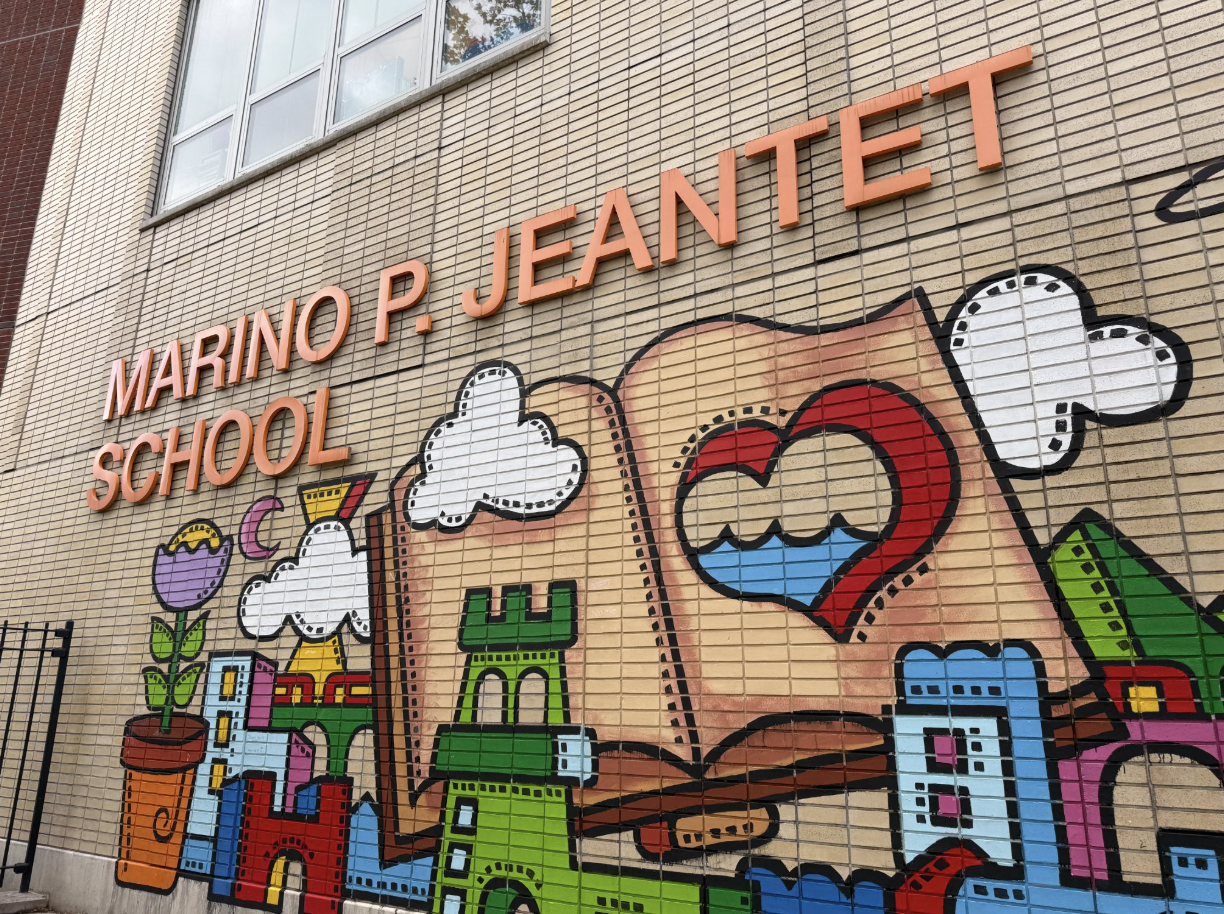
P.S. 19Q is the largest elementary school in Corona, Queens. Currently, just under 1,400 children are enrolled, a drop from the nearly 1,700 students the school had in 2023, according to NYC Open Data.
(Credit: Karla Perez)
Clusters of parents waited patiently outside of P.S. 19Q on a recent afternoon, many pushing strollers or with younger children gripping onto their hands. When the clock struck 2:20 p.m., a sea of children dressed in navy and white polos, scurried out of school and into those parents’ arms. Despite the chill in the air, some parents still treated their children to ice cream from one of the several carts parked outside.
There are nearly 1,400 students enrolled in P.S. 19Q, making it the largest elementary school in Corona – but that’s still far fewer children than there used to be. As recently as 2023, there were more than 1,700 students enrolled, according to NYC Open Data.
The trend of shrinking enrollment isn’t isolated to Corona. According to the Department of Education, the entire New York City public school student population was less than 885,000 students last academic year — that’s a 2.4% percent drop in a single year, around 20,000 fewer students, according to the New York City Independent Budget Office. An enrollment projections report published last spring predicted a continuous steady decline, with an enrollment of just over 720,000 students by 2034.
So, where have all the children gone?
Sonia Calle, mother of a 5th grader at P.S. 19Q, said four of her daughter’s friends did not return to school this year.
“My daughter, she said, ‘Mama, my friends are leaving, they’re scared of immigration, of ICE,’” she said. Neither she nor her daughter know where those children are now.
New York City Public Schools gained a total of 32,000 migrant children from 2022-2024, according to the projections report. After January 2024, that trend took a turn south.
The report cited changes in federal policy regarding immigration and a rise in deportations as one of the reasons behind a decrease in migrant children enrolled during the 2024-25 academic year. Queens saw a 3% increase in foreign-born residents from 2020-2024, the largest increase out of all five boroughs. Brooklyn, New York’s most populated borough, saw an increase of just under 2%, according to the report.
But more immigrants doesn’t necessarily mean more children enrolled in local schools. Nuala O’Doherty-Naranjo, attorney and founder of the Jackson Heights Immigrant Center, said many migrant parents are anxious about sending their children to school, or even walking with them or waiting for them at bus stops. Many are concerned that congregating in one area could attract immigration enforcement.
“You have an absolute legal right to an education,” O’Doherty-Naranjo said. “You can enroll your child into school. The question becomes, is it safe for you to live in the society where your children go to school?”
An Ecuadorian mother of four in Corona, who spoke on the condition of anonymity for fear of deportation, said her daughter in elementary school has noticed her class sizes dwindling.
“Last year, there were some kids from her country. Because they’re afraid they [ICE] will arrest their parents or they’ll arrest them, they’ve withdrawn mid-year and gone back to their country,” the mother said.
The secretaries at P.S. 19Q said that enrollment has fluctuated over the years due to charter schools opening or families moving away from the city’s high cost of living. Still, some of the recent decline, they agreed, was likely tied to immigration.
“We used to have children enroll late, like in April, May,” said Alexa Tangorra, who has worked as a secretary at P.S 19Q for 14 years. “That doesn’t happen anymore.”
Shannon Waite, a former member of the Panel for Educational Policy, noted the sanctuary status of New York City, but said the current federal immigration climate is not one in which migrant families can thrive. Parents fear for their lives and children worry if they’ll be detained on their walk to or from school.
“It creates an environment of fear and desperation,” Waite said. “It puts a vulnerable population in an even more vulnerable situation.”
About the author(s)

Karla Perez is a full-time M.S. student at the Columbia University Graduate School of Journalism who aspires to have a career covering education and immigration.