



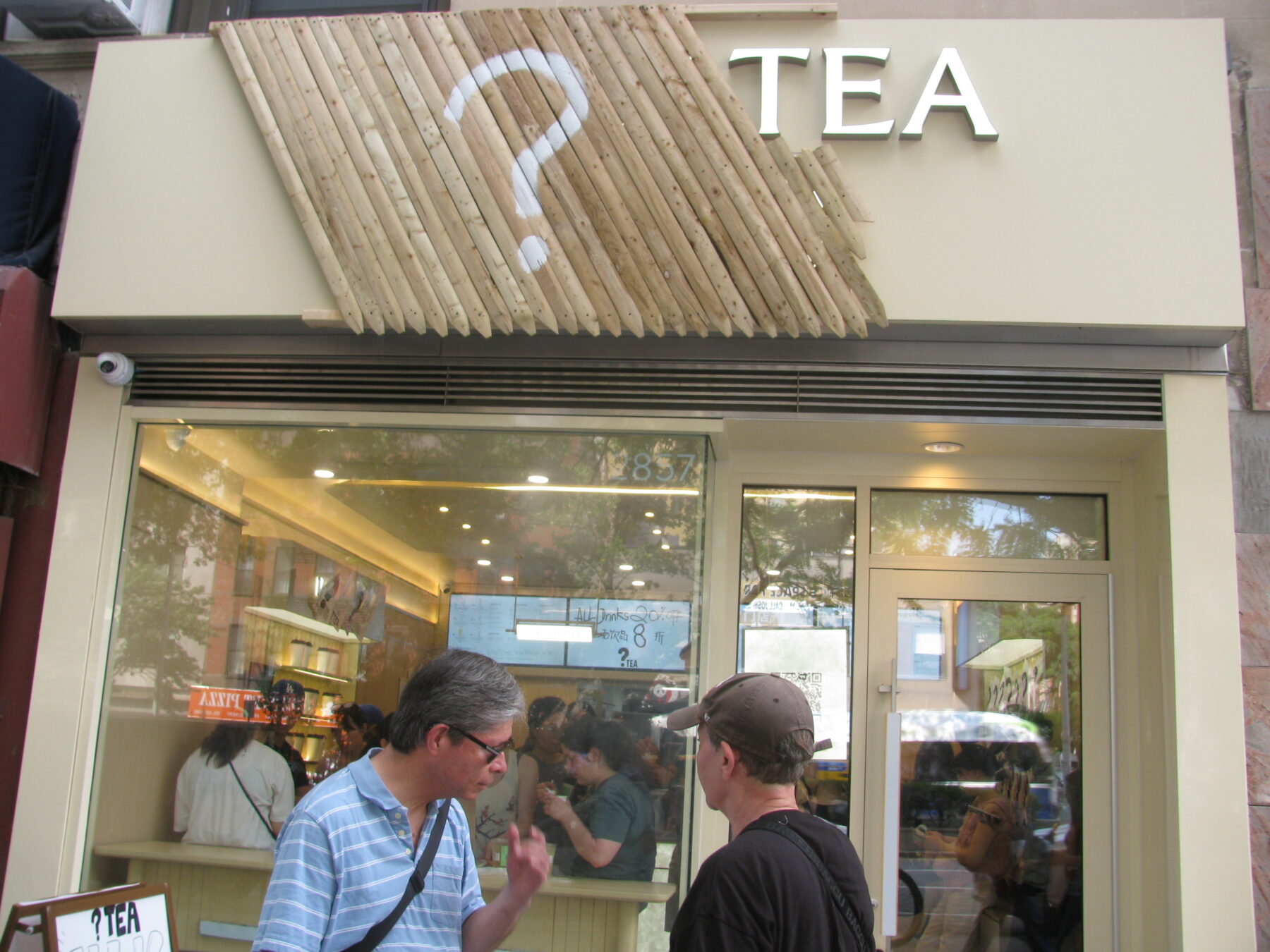
After changing its name to “?” Tea, the shop near Columbia University still filled with customers waiting for their tea orders. (Credit: Haiyi Bi)
On June 10, puzzled milk tea lovers in New York started to notice that their usual go-to place, Molly Tea, was quietly replaced with question marks as their logo.
The following day, its parent company in China, “MollyTea Global” announced on Xiaohongshu, one of China’s largest social media platforms, that it had cut ties with several New York locations over repeated contract violations and unauthorized use of its brand.
The statement stressed that “New York Columbia U’s store never got authorization from Molly Tea,” then explained a few refunds and changes in membership policies.
Founded in southeastern China’s Shenzhen, the tea chain says it had grown to more than 2,000 stores worldwide by November 2025, with locations across China and a growing presence in markets including the United States, Canada, Australia and the United Kingdom. The company has listed stores in New York, Boston and Bellevue, but the dispute in New York shows the challenges of expanding overseas.
The dispute began after Molly Tea partnered with “MHL NY LLC” to open four stores in New York in late 2023. The relationship later deteriorated over disagreements involving store ownership, lease arrangements, operational control, and a proposed restructuring of the partnership, according to court filings.
Molly Tea’s headquarters accused the local operators of opening and controlling stores outside the agreed joint-venture structure and continuing to use the brand after authorization was terminated, according to court documents. The local operators denied wrongdoing and alleged that the parent company attempted to seize control of the businesses by cutting off supplies in the tea products, closing operating systems, and removing the stores from delivery platforms.
In the past month, Molly Tea filed a lawsuit in the U.S. District Court for the Southern District of New York, asserting claims including trademark infringement and breach of contract and seeking more than $5 million in damages.
On June 8, the court issued a preliminary injunction temporarily barring the stores from using Molly Tea’s trademarks, branding, online accounts, and delivery-platform listings. The order explains the recent removal or alteration of the stores’ signs, but it is not a final ruling on the underlying dispute, which remains ongoing.
The four New York stores were originally authorized by Molly Tea. The dispute began after the agreements ended and the stores kept operating under a different name.
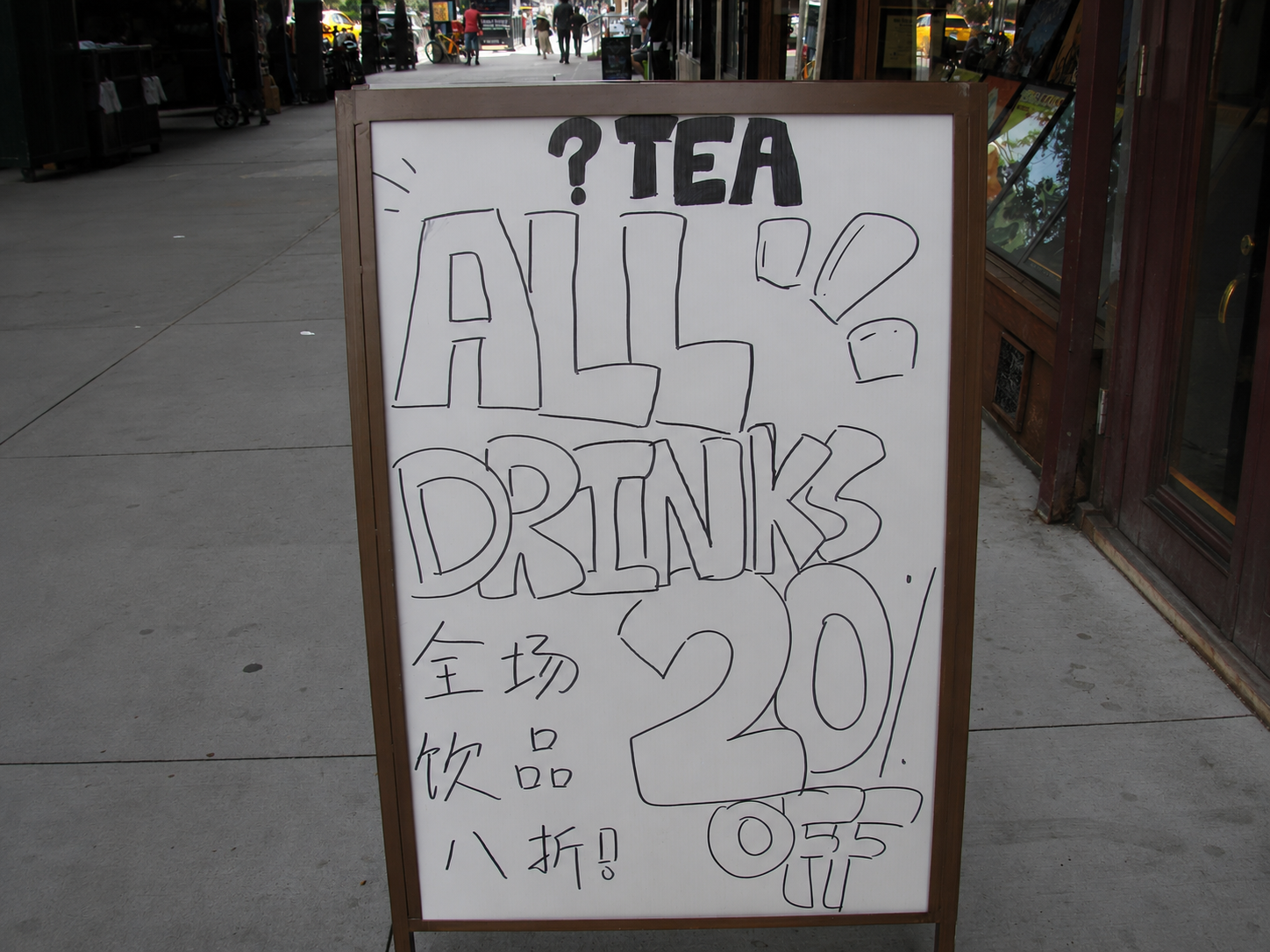
Outside of the Columbia University shop, a sign saying “All drinks 20% off” attracts attention from people passing by. (Credit: Haiyi Bi)
For now, business appears to be continuing as usual. On a recent June afternoon, the stores offered 20% off all purchases and promoted new membership benefits, while many customers remained either unaware of, or largely indifferent to, the legal battle unfolding behind the scenes.
On the menu, drinks range from $5.59 for traditional brewed teas to $8.99 for specialty topped or layered beverages in New York City. Most of their signature fresh milk teas are priced between $7.59 and $7.99.

Menu of the Columbia University shop, with images replaced by question marks all around the packaging. (Credit: Haiyi Bi)
Meixi Shang is a recent graduate of Columbia Law School. She’s only been to Molly Tea once or twice, but the growing discussions on Xiaohongshu lead her to decide to see the store in person.
“Although I’m a law student, I don’t really care about who’s right or who’s wrong in this. I’m really impressed that they turned Molly Tea into Question Mark Tea instead of just shutting the whole store down,” Shang said.
However, some customers are feeling bitter about this change in their favorite tea choices. They are unsure if the store will keep opening in the future, and were hesitant to keep supporting it.
“My friend said we should just drink their tea before they shut down, but I was a little bit against this brand after the whole thing happened,” said Zhaolin Liu, a recent Columbia graduate who lives near the store and visits every few days.

Customers taste the signature pistachio white orchid tea at the store, with the sticker on the drink also changed to “? Tea – Columbia University. (Credit: Haiyi Bi)
Molly Tea’s legal battle could end in several ways, including a settlement, a permanent rebrand, renewed cooperation, or a longer fight over damages and intellectual property.
The case also goes beyond the company’s name and logo. Molly Tea says the New York operators kept using confidential recipes, training materials and other proprietary information. The court has not yet made a final ruling on those claims.
The dispute resembles other cases involving former franchisees that continued using a brand after their agreements ended.
In a 2015 Dunkin’ Donuts case, a federal court stopped a former franchisee from using Dunkin’s trademarks, citing possible customer confusion and harm to the brand. Molly Tea’s case will depend on the terms of its own agreements and the evidence presented in court.
“I first saw on Xiaohongshu that the Flushing store’s closure might involve a franchise-fee dispute, and although I felt hesitant about the brand afterward, I still come every few days because I like its floral drinks,” Liu said.
Liu thought the 20% discount might be the store’s way of bringing in customers and selling off what was left. When she saw that drinks like the apple-flavored tea were already gone from the menu, she started to wonder how much longer the store would stay open.
About the author(s)

Haiyi Bi is a M.S. student in data journalism at Columbia Journalism School, whose reporting focuses on arts, culture, immigration and data-driven investigations.