




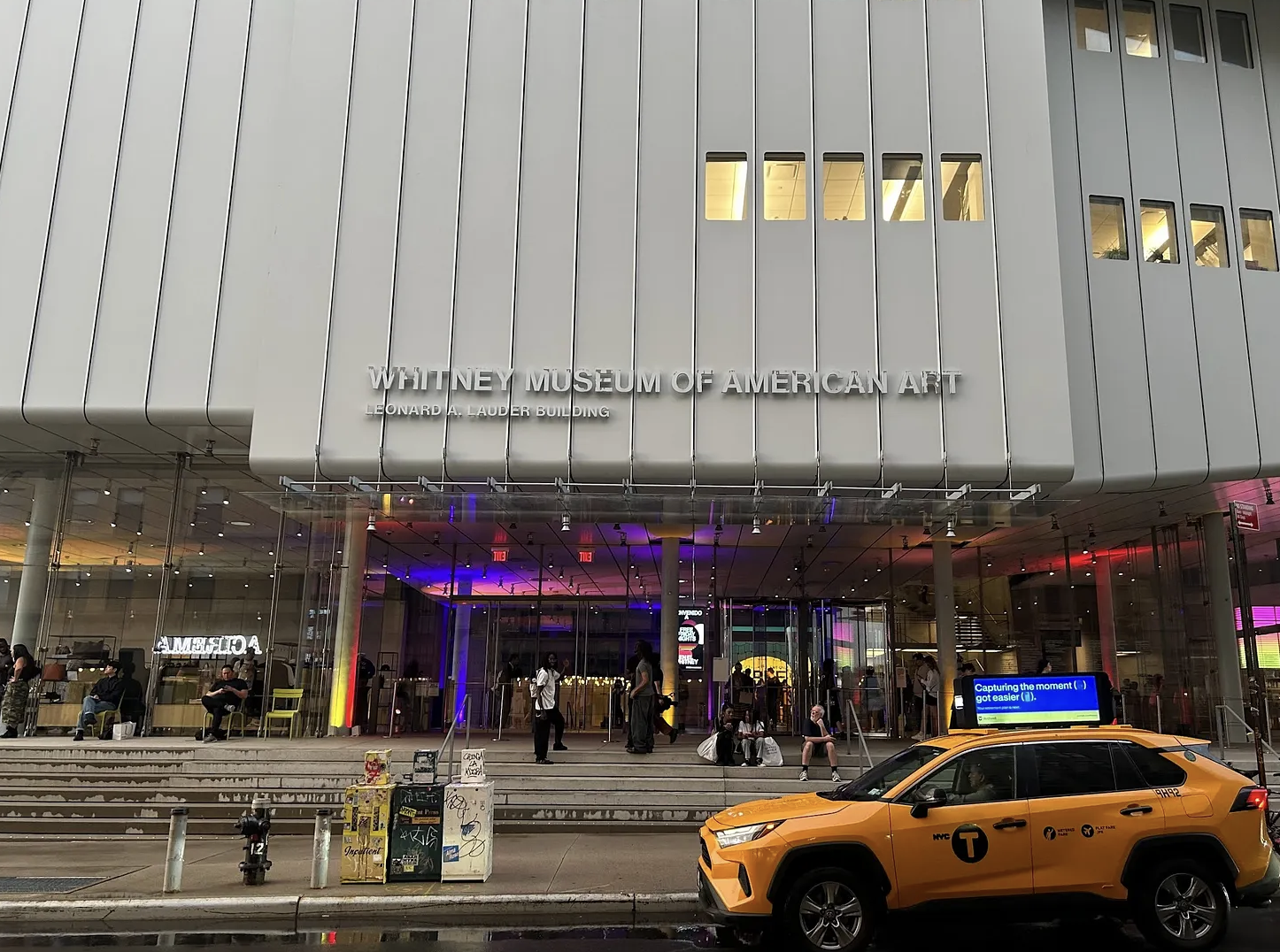
The front of the Whitney Museum of American Art on Oct. 2, 2026. (Credit: Satvik Shubham)
For eight years, Derrick Charles has helped people at the Whitney Museum of American Art buy tickets, find their memberships and navigate the museum. He makes $24 an hour.
On Oct. 5, he is one of about 185 unionized workers at the Whitney who plan to go on strike. The date falls on the opening week of a major show on pop artist Roy Lichtenstein.
“Sometimes you have to choose between groceries or rent, and that’s just trying to survive,” said Charles, a visitor and member assistant who chairs the Whitney union.
The workers are represented by UAW Local 2110 and plan an open-ended strike starting Oct. 5 if they do not have a new contract. In an Oct. 2 statement, the union said it had been bargaining since early May and that the deadline still stands.
The Whitney is not the only museum where workers voted to strike this year. Workers at the Brooklyn Museum and the American Folk Art Museum, who are represented by the same union, also voted to authorize strikes, the union announced Sept. 15, and staff at the South Street Seaport Museum followed about a week later. A fifth, the Guggenheim, authorized a strike in late June, with job security a central issue after the museum laid off 20 employees in February 2025.
Three of those unions have since settled. The Guggenheim union ratified a new contract in September, and Brooklyn Museum and American Folk Art Museum workers ratified four-year contracts this week, the union announced Oct. 2. The Whitney is the only one where workers set a strike date.
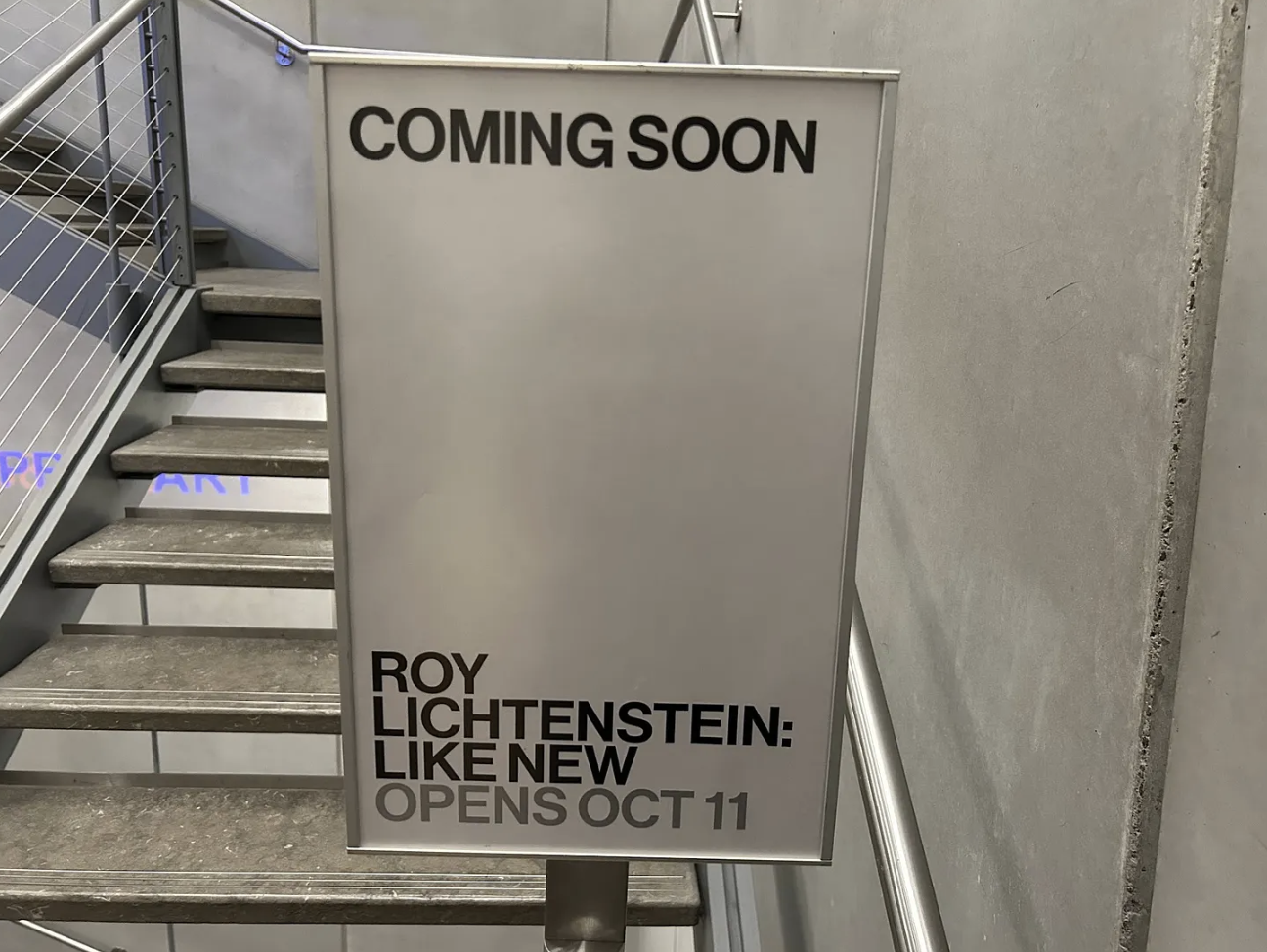
“Roy Lichtenstein: Like New” opens to the public Oct. 11. (Credit: Satvik Shubham)
The show, “Roy Lichtenstein: Like New,” has more than 130 works and is the first major survey of the artist in more than 30 years. Press previews begin Oct. 6, with VIP and donor events planned throughout the week, the union said in its Oct. 2 statement. Member previews run Oct. 8 through 10, and the show opens to the public Oct. 11.
John Kallas, an assistant professor at the University of Illinois School of Labor and Employment Relations who researches strikes, said the threat of a strike alone creates uncertainty for an employer and makes it “harder to plan for a potential strike.” This unpredictability is especially challenging from an organizational standpoint. If workers do walk out, he said, it causes “some economic damage” and “definitely causes a PR struggle for the employer.”
A strike at the Whitney would be rare. The last major strike at a New York museum came in 2000, when MoMA’s union of about 250 members went on strike for 134 days. When workers at the much smaller Hispanic Society Museum & Library walked out in 2023, it was the first New York museum strike in more than 20 years.
Workers voted 96-1 to join Local 2110 in a 2021 labor board election. Their first contract was ratified in 2023 after 16 months of bargaining and raised entry-level pay from $17 to $24 an hour. It expired June 30. In May, a museum spokesperson told The Art Newspaper that the two sides had begun negotiating a new contract.
Now, workers say their pay has not kept up with New York’s cost of living. Ninety-nine percent of Whitney members who voted authorized the strike, The Chief reported.
After the Sept. 15 strike vote, a Whitney spokesperson told ARTnews that the museum was bargaining in good faith. The museum has not commented publicly since the strike date was set. It did not respond to multiple interview requests from Columbia News Service or to written questions.
The union wants base salaries of about $71,000 for full-time workers. It bases that figure on the city’s first True Cost of Living report, released April 6 by the Mayor’s Office of Equity and Racial Justice, which found a single adult without children in New York needs $70,334 a year.
The union also wants lower healthcare costs. Micah Musheno, a licensing manager who has worked at the Whitney for nearly a decade, said in September that workers with families pay 15% to 20% of their premiums.
Maida Rosenstein, Local 2110’s organizing director, did not respond to multiple requests from Columbia News Service by email, phone and message. The union’s positions in this story come from its public statements.
Neither the museum nor the union has publicly released the Whitney’s wage offer. In its Oct. 2 statement, the union said the museum’s offer was inadequate given inflation and the cost of living in the city.
For comparison, the Brooklyn Museum’s new contract sets minimum full-time salaries between $63,585 and $129,854, depending on the job, Artforum reported Oct. 2. The lowest of those is below the $71,000 Whitney workers are seeking, though the minimums rise about 10% by the end of the contract term.
The union has also pointed to what it describes as the Whitney’s more than $1 billion endowment as a sign that the museum can afford what workers are asking for, The Art Newspaper reported Sept. 29. The museum’s most recent public tax filing, covering the year that ended in June 2025, shows about $1.1 billion in total assets, including about $555 million in endowment funds.
That year, the museum reported $191.4 million in revenue and $96 million in expenses, according to the filing, which the museum posted on May 8. About $130 million of the revenue came from investment income. The museum spent about $46.9 million on salaries and benefits for the 590 people it employed during 2024, and paid its director, Scott Rothkopf, nearly $1 million.
A strike is “always the last resort,” said Penny Lewis, chair of the labor studies department at the City University of New York School of Labor and Urban Studies. She said authorizing one shows management that there “has not been sufficient progress at the table.”
Unless the Whitney and the union reach a deal by Sunday night, workers plan to walk off the job Monday, Oct. 5.
“We love working here,” Charles said. “We want to continue working here.”
About the author(s)

Satvik Shubham is a graduate journalism student at Columbia Journalism School covering labor, arts and entertainment in New York City.