




The Fenix Community Fridge in Ridgewood, Queens has seen the need rise in recent years. (Credit: Marina Felix Garcia)
On a recent afternoon, a 7-year-old girl quietly waited in a line of nearly 50 people at the Fenix Community Fridge in Ridgewood, Queens. Once a week, residents from surrounding areas gather to receive free boxes of fresh food donated by local supermarkets and nonprofits.
Antonio Vaca, organizer and owner of the fridge, recognized the girl and offered to carry the box for her. “If she’s here on her own, then I would guess nobody’s home to help her,” he said.
Vaca started the community fridge in 2020 and said he has seen the need for food assistance in the neighborhood steadily grow since.
Beatriz Perez, manager of Fenix Car Service and co-coordinator of the fridge, said she’s now bracing for even more need because of the Trump administration’s cuts to federal food assistance programs.
“We’re ready to face whatever comes our way, we won’t stop feeding the community,” she said. “And if necessary, Antonio will take money out of his pocket to fill the fridge, since that is how we started this.”
The Fenix Community Fridge is one of between 600 and 650 in New York City, according to the FridgeFinder website. The city has the highest density of such fridges on the East Coast, with most of them being located in Brooklyn. Food pantries and community fridges often serve the unhoused as well as working families, providing nutritious free food.
In 2023, according to the U.S Department of Agriculture (USDA), 6.5 million American families with children lived in food insecure households, meaning that they had limited or uncertain access to adequate food.
Over the summer, the One Big Beautiful Bill Act cut $186 billion from Supplemental Nutrition Assistance Program (SNAP) over the next decade. On November 1, the USDA announced that SNAP recipients will have their aid delayed in November, due to the ongoing government shutdown. The banner, still on their website, claims that “the well has run dry.”
Gov. Kathy Hochul announced that New York is in a state of emergency and will use $65 million in state funds for emergency food assistance to support 3 million residents affected by the cuts—1.8 million of them reside in New York City.
The SNAP program provides monthly deposits on an Electronic Benefit Transfer (EBT) card, which recipients can use at local grocery stores and farmers markets. The recent cuts will change how food-insecure families, and those without health insurance, budget and buy their food.
When families face food insecurity, they often have to rely on cheaper foods that are lower in nutritional quality, said Sandra Albrecht, assistant professor of epidemiology at Columbia University’s Mailman School of Public Health.
“All these policy changes are really unfortunate…When you have programs that are funded by the government, people can count on those,” said Albrecht. “Food pantries are well-intentioned and we hope they can be reliable, but it’s not wise to depend on them given how unpredictable long-term support can be.”
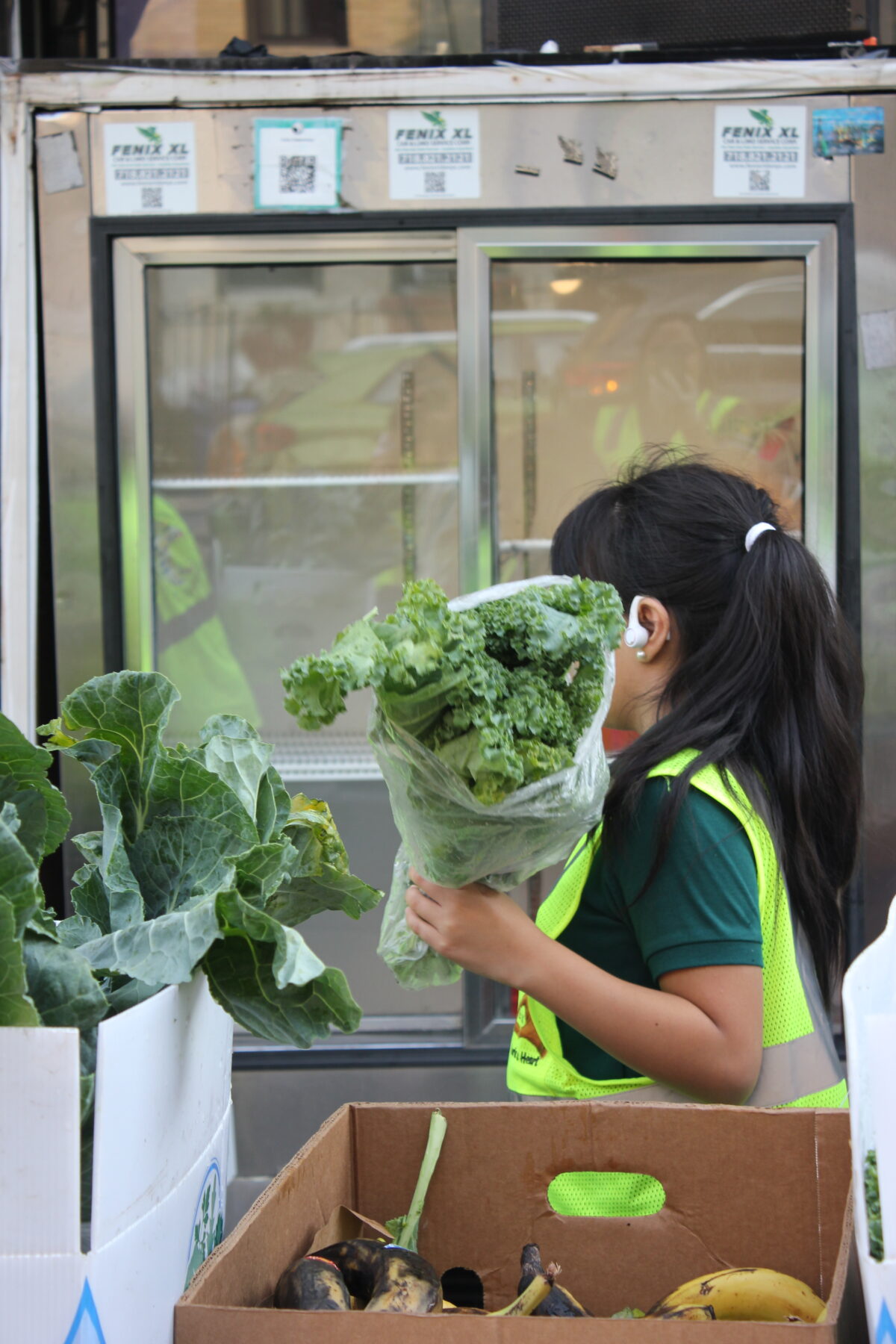
Youngest volunteer at the Fenix Community Fridge. (Credit: Marina Felix Garcia)
Sunita Malhotra, outreach coordinator at the Ridgewood Women, Infants and Children (WIC) center said that federal programs bring stability to families who otherwise face uncertainty.
The WIC program, which is funded by USDA, aims to provide nutrition counseling and financial aid to pregnant women and children in New York.
“WIC does not require immigration status, we don’t ask for it,” Malhotra said. “If you have Medicaid, food stamps, or Essential Plan, you automatically qualify and proof of income is not needed.”
In 2024, there were 61,750 families in Queens participating in the WIC program.
Jalene Cruz, deputy director of Neighborhood WIC, said that demand for food rises during the back-to-school season and summer.
“We always have plenty of appointments year-round, but we see a spike then,” she said. During those periods, participants can receive an extra $5 to $20 in vouchers for purchases at local farmers markets—vouchers that are federally funded.
During the Covid-19 pandemic, the Fenix Community Fridge received donations from the city government too. But that support didn’t last long, ending shortly after the pandemic.
“The government used to send us boxes full of food, but they cut this,” said Perez.
The community stepped up to help. Neighbors and local businesses donated produce and excess food, and volunteers spread the word through social media.
Hungry Monk Rescue Truck, a nonprofit that delivers hot meals to the homeless, has become one of the main collaborators.
“There’s a lot of sharing between the different organizations,” said Father Mike Lopez, a priest and founder of the nonprofit. “We’re food rescuers, you know.”
Lesley Real, 17, doesn’t live in Ridgewood, but most Fridays after school she makes a long commute to get in line at the Fenix Community Fridge. On a recent Friday, she was smiling from ear to ear, proud of arriving two hours early and being the second person in line, which meant she could get home earlier and with a bag full of fresh food.
“I came from Brooklyn to help my parents with the grocery shopping,” she said. “Usually the line goes around the block, so I’m glad to be in front.”
About the author(s)

Marina Felix Garcia is a freelance journalist from Rio de Janeiro, Brazil, pursuing her master’s at Columbia Journalism School. She specializes in multimedia reporting.