




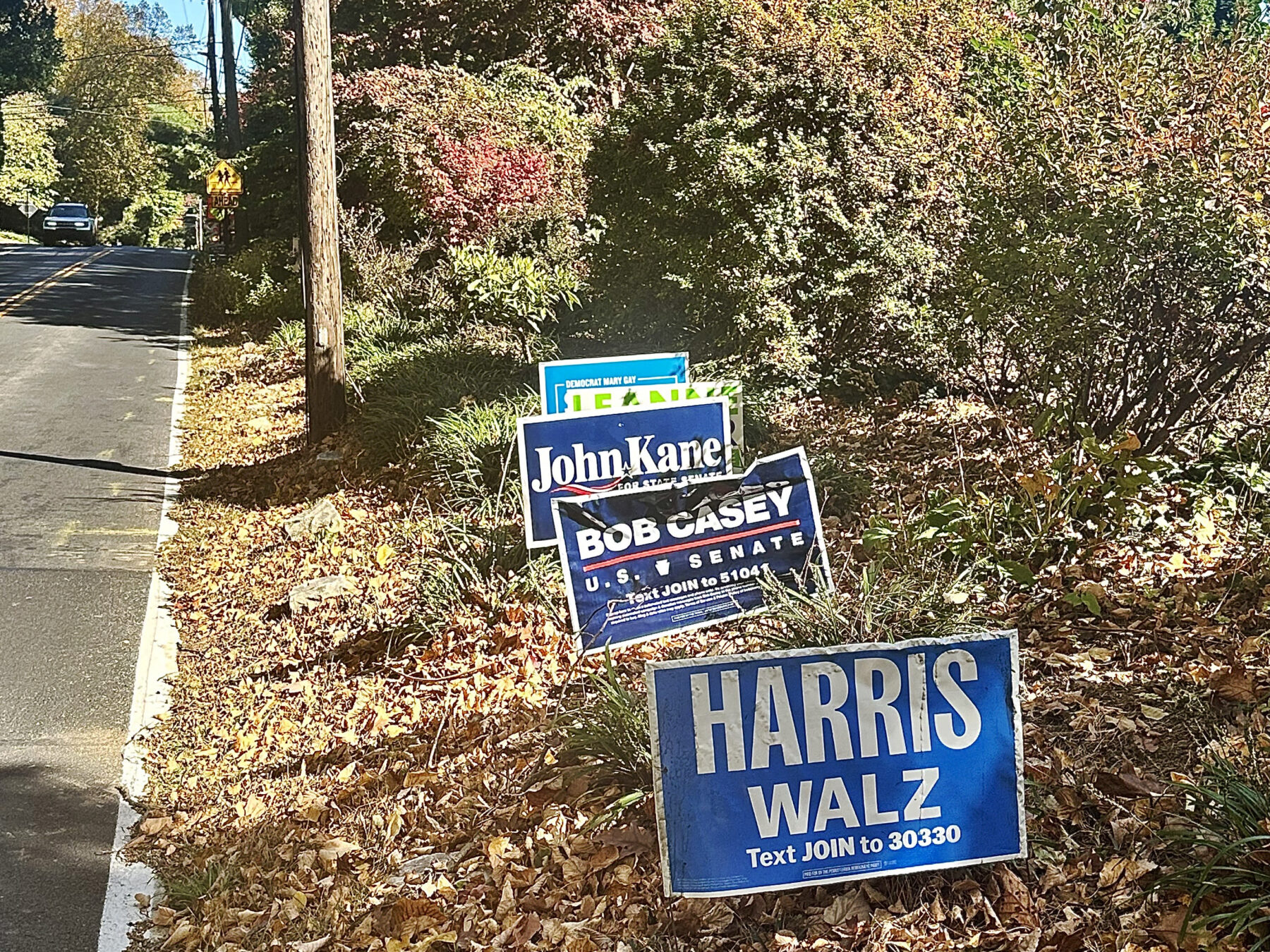
 A group of nervous and excited volunteers lined up on Greenwich Street in Tribeca around 8 a.m. on a chilly October morning. As they loaded three busses carrying boxed lunches, the volunteers looked united, wearing “Harris/Walz” blue and white t-shirts for a canvassing trip to Swarthmore, Pennsylvania.
The group represented Queers for Kamala and Broadway for Harris, two nonprofit organizations that have made it their mission to get-out-the-vote and advocate for key policies before Election Day on November 5. The coalition has led four canvassing trips to different parts of Pennsylvania with more planned until Election Day.
Political canvassing involves gathering opinions and data in a given district, followed by door-knocking to ask people about their voting plans for the upcoming election. Among the 150 volunteers that showed up for a trip to Pennsylvania, some had previous experience canvassing for past presidential and city council campaigns, while others had none. But all of them said it was essential to get involved for this race and do as much as possible to help.
Jonathan Wilcove, a high school teacher, has been canvassing since 2004. He rode on the Broadway for Harris bus.
“It’s just a great way to meet people and make a difference in swing states such as this one,” said Wilcove, who’s volunteered in Pennsylvania a few times, including one recent trip that was “a little weird,” he said.
“We heard gunfire in these rural areas, and I wasn’t used to it,” said Wilcove, adding that he never felt in danger while knocking on doors and that most people were friendly.
During the bus ride to Swarthmore, four coordinators trained the volunteers, giving them each a cheat sheet, including a script to use when talking to people. They also received instructions to use an app that logs household information. In advance of their canvassing trips, the organizations receive voter intel from TargetSmart, a system that collects up-to-date voter information through polls, analytics, and current registration data.
Once the busses arrived outside the Swarthmore train station, the volunteers paired up and received their destinations. But the coordinators reminded them of the rules: Do not argue with Trump supporters or try to sway Republicans. Instead, collect voter data, listen to residents, and offer explanations of Harris’s policies if people were undecided.
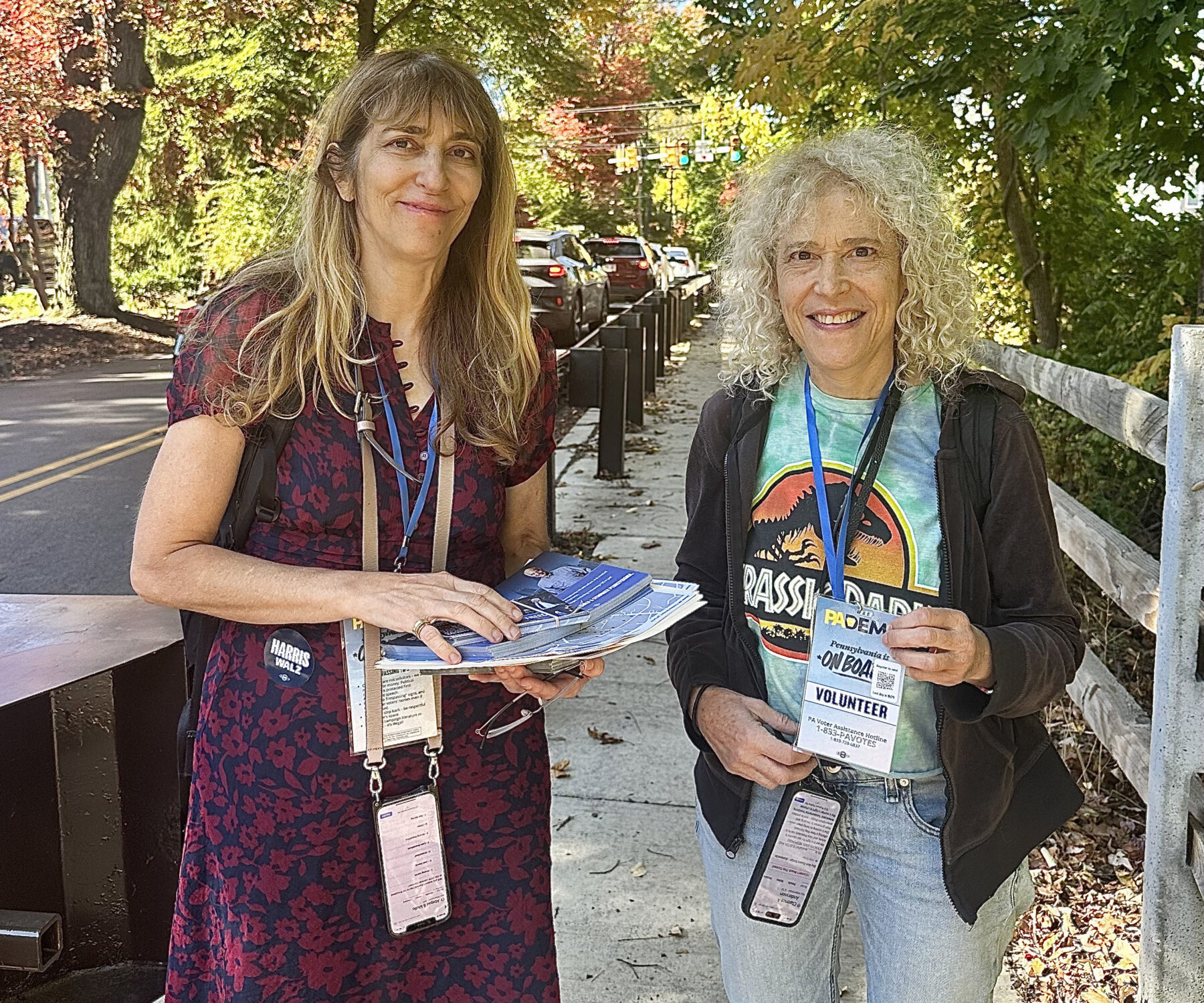 Judy Ross and Barbara Ross (pictured above), sisters who’ve lived in New York for over 40 years, have almost always voted Democrat. They’ve canvassed in other areas before, but this was their first time in Swarthmore.
“I feel like she’s someone who cares about the law and will do what’s best for the country, not just herself,” said Judy Ross about her support of Harris. Both sisters agreed that the vice president’s selection of Tim Walz as her running mate, instead of Governor Josh Shapiro to secure Pennsylvania, was the right decision.
“I think it shows that she wants someone who will represent more of the country, and I just trust them more than the other person running,” said Judy Ross.
The sisters knocked on over 100 doors and said most people they interacted with planned on voting for Harris. One conversation that Judy Ross had with a man went so well that he asked if she could speak to his daughter and give her campaign literature.
“This is the amazing thing about canvassing,” said Barbara Ross. “The fact that they opened the door was incredible. And then that he wants his daughter to be part of it, I just love that. That’s kind of how it keeps you going. It makes you feel like, everything’s going to be okay.”
But the sisters did meet a few undecided voters who weren’t interested in hearing about Harris’s policies. One woman said she didn’t like either option but approved of Trump’s economic plans more.
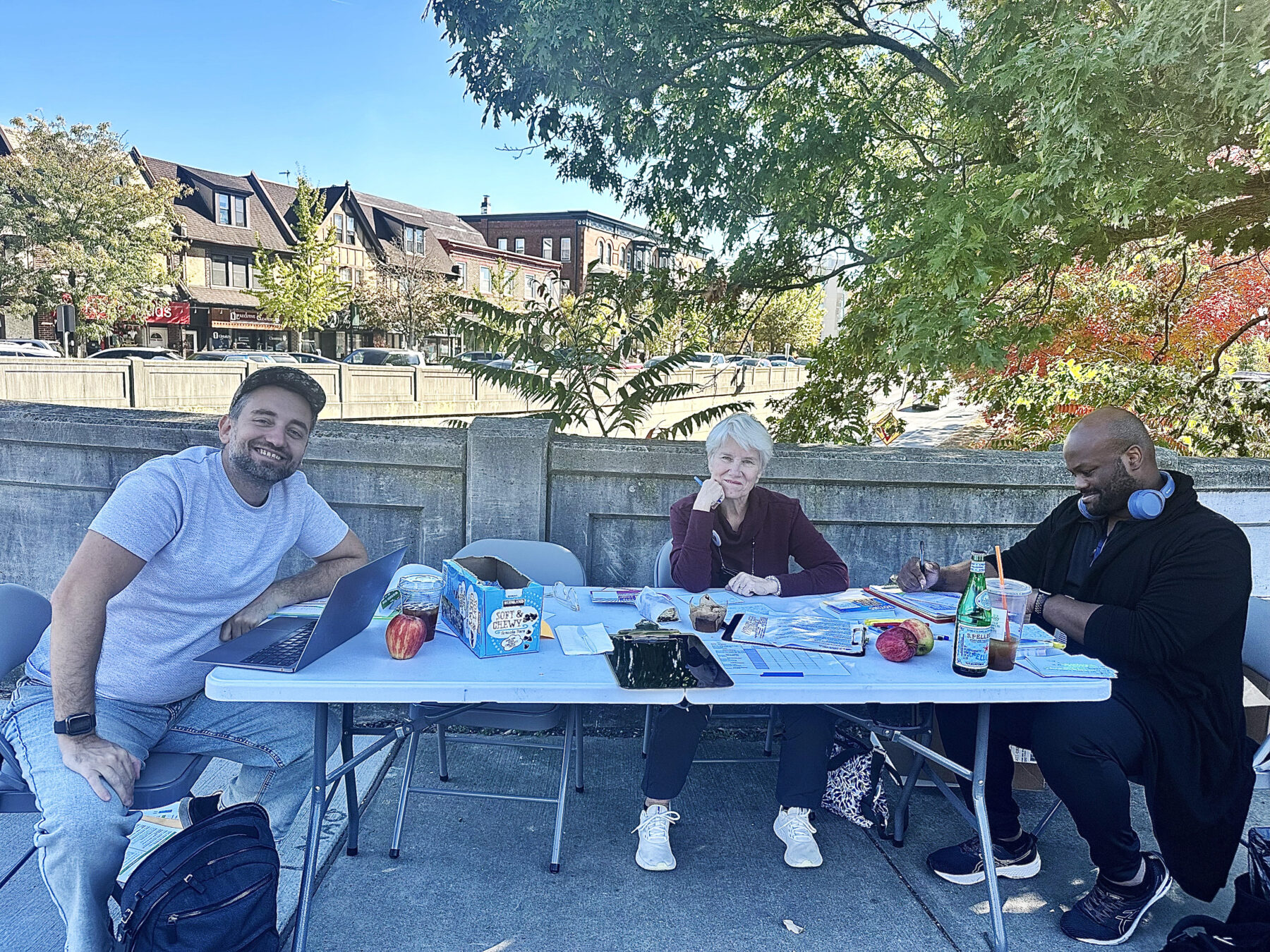
After canvassing for five hours, the groups knocked on a total of 6,000 doors, the most that the coalition groups had ever seen, said Max Marshall, one of the coordinators.
On the trip back to New York, volunteers exchanged stories about the types of residents they met and the success of the day.
“I was about to leave after talking to one couple when the Amazon delivery man came up with a package,” a volunteer said, “and I convinced him to register to vote.”
(Photo credit: Fiona Sullivan)
About the author(s)

Fiona Sullivan
Fiona Sullivan is a multimedia journalist and graduate student at the Columbia Graduate School of Journalism covering politics, culture, and social justice.