



CNS reporters covered Climate Week NYC which featured 1,500 events across the city and drew more than 120,000 participants.
Place-based Ideology
Climate Literacy Must Start Local, Experts Say
Amidst the politicization of the climate crisis, climate education will take more than science alone.
By Georgia Campbell
When Rajendra Dawadi recognized the signs of a flood rushing toward his school in Nuwakot, Nepal, in early September, the headteacher instructed students to evacuate immediately. Ten minutes after the building was cleared, according to multiple news outlets, Tribhuvan Trishuli Secondary School was demolished by a deadly torrent of mud and water.
Just weeks before the floods, Dawadi received practical training on the signs and severity of environmental disaster from the education charity Street Child. As the impacts of climate change increasingly become an everyday reality, climate literacy can save lives.
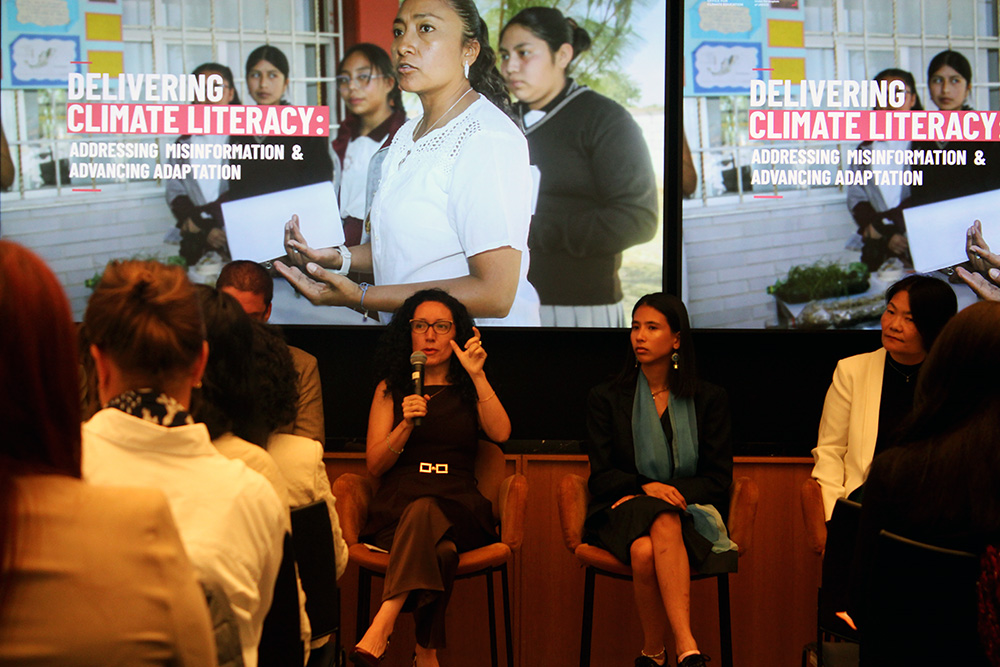
Dawadi’s story was the concluding anecdote of a UNESCO roundtable on September 23, hosted by Siemens Siftung, a non-profit that works towards sustainable social development, including climate education. The roundtable focused on delivering climate literacy – the understanding of human influence on the climate and vice-versa – and brought educators and climate specialists from around the world to the Penn One Building in Manhattan. The panel was unanimous on one point: explaining science alone cannot solve the problem of climate literacy.
Protect Where You Play
Athletes Use Their Platforms to Speak Up for the Oceans
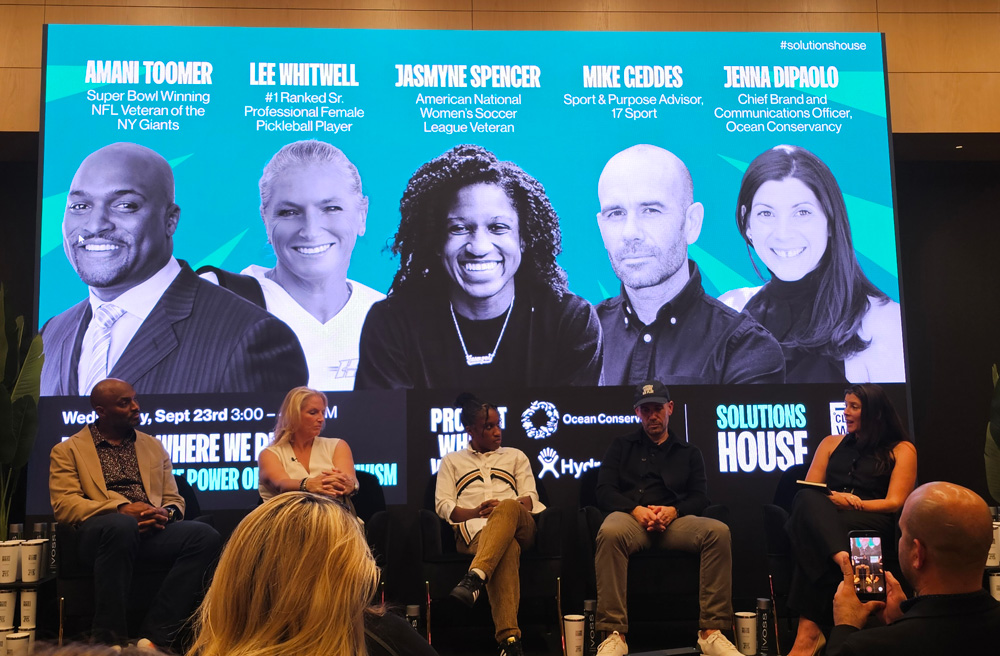
Amani Toomer, Jasmyne Spencer, and Lee Whitwell explained during Climate Week why their platforms could help protect the waters and fields where they play.
By Valeria Cortés
It seemed an unlikely trio: an NFL veteran, a former National Women’s Soccer League star, and the world’s top-ranked senior pro female pickleball player. United, not around a game, but for the ocean.
The three athletes—Amani Toomer, Jasmyne Spencer, and Lee Whitwell—spoke at a Climate Week panel on September 23 about using their platforms and influence to raise awareness about environmental issues. Toomer, Spencer, and Whitwell are part of the Ocean Conservancy’s “Protect Where We Play” initiative, which seeks to involve more people in caring for the oceans.
“Every second breath comes from the ocean,” Whitwell said. “We need to do a lot more to protect it, to preserve it.”
Since its launch in February 2025, the initiative has partnered with sports leagues and venues, including the Seattle Seahawks, who won this year’s Superbowl. One of the campaigns aims to prevent single-use cups from entering the waste stream at arenas across the country.
Environmental Center
South Bronx Breaks Ground on New Arts and Wellness Center
The $44.6 million HEArts complex, set to open in 2028, will bring green jobs, gardens and health education to a neighborhood with some of the nation’s highest asthma rates.
By Francesca Di Muro
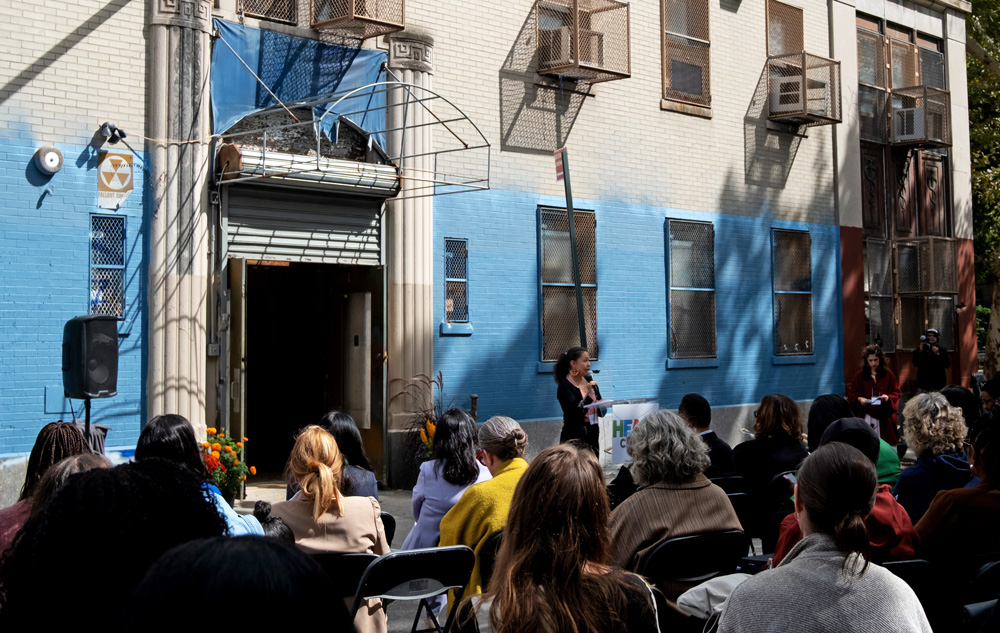
Since 2013, the building at 349 East 140th Street has stood empty on a stretch of the South Bronx known as “Asthma Alley.” It once housed the Lincoln Detox Center, founded by members of the Black Panthers and the Young Lords, who pioneered acupuncture as an addiction treatment in the 1970s. Now the building that led one fight for community health is about to lead another.
Construction began Sept. 23 on HEArts, a $44.6 million center that will bring health, education, art and the environment under one roof. Set to open in 2028, it caps more than a decade of organizing led by South Bronx Unite, with support from at least five other local groups, including several of the center’s future tenants.
David Rosales of South Bronx Unite said the center is meant to be a gathering place that connects neighbors.
“We’ve fought for nearly 15 years to transform the abandoned Lincoln Detox Center into what you’ll see here in just a few years,” said Aresh Javadi, an artist and co-founder of the community group More Gardens!
This Human Brain of Mine
Demonstrators Call for AI and Data Center Slowdown in Rally Outside Google
“Unplug AI” Week of Action scheduled rallies at OpenAI and Amazon’s offices.
By Nick Mossman
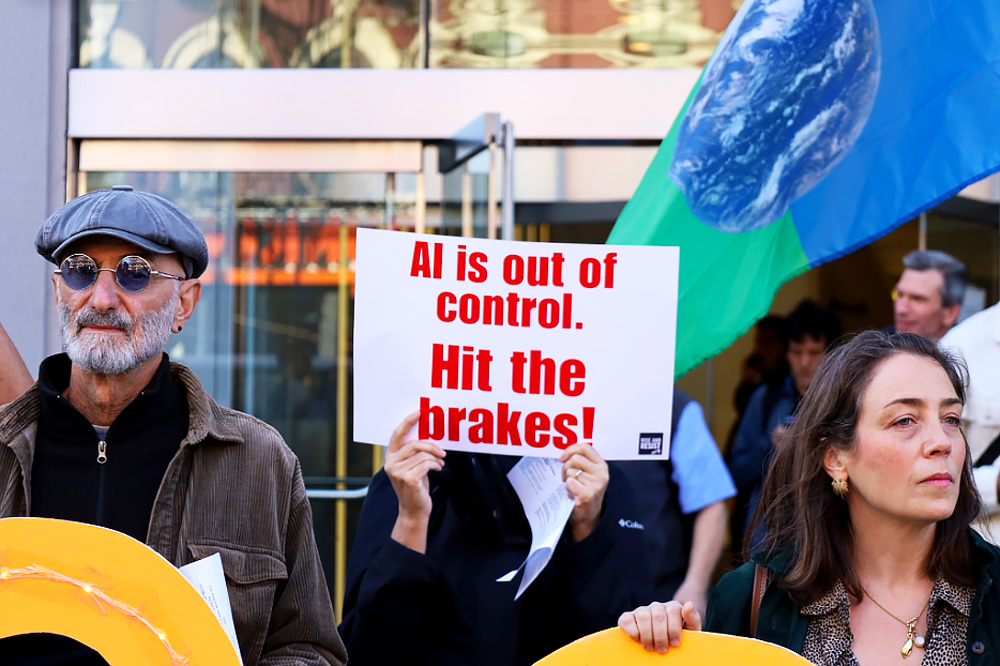
Bicycles whizzed past Google’s 8th Avenue building as about 50 people chanted children’s songs and call-and-responses with updated lyrics on Sept. 23.
“This human brain of mine, I’m gonna let it shine,” some sang as Google employees walked out of the building at the end of the business day.
The demonstrators’ lyrics warned against unchecked artificial intelligence development by companies like Google.
“Google’s AI is insane,” they chanted. “Don’t let AI rot your brain.”
The demonstration was part of an “Unplug AI” Week of Action sponsored by Climate Defenders, a non-profit based in New York City. Demonstrators also scheduled rallies at OpenAI and Amazon’s offices in the city earlier in the week.
The protests come days after AI industry leaders warned of potentially existential impacts if AI development does not slow down.
Environmental Monitor
What Can We Learn from the DNA Stored in Honey?
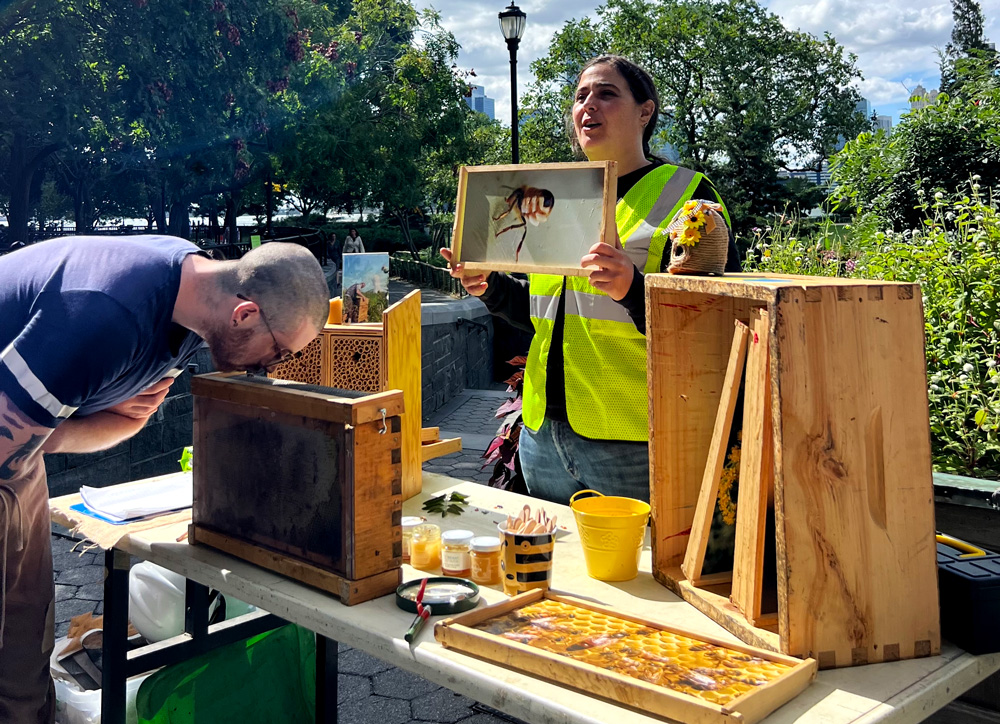
Bees bring data from the environment they live in back to the hive after foraging, which shows up in the honey they produce.
Honey, it turns out, contains much more than sweetness.
New Yorkers got a chance to visit with a beekeeper, see hives, and sample honey during New York Climate Week. The Battery Park City Authority and Alvéole, a hive-tending company, held “Meet the Beekeeper” at Rockefeller Park.
Kristen Rydberg, one of 60 full time beekeepers working for Alvéole in the U.S., talked about the benefits of keeping bees in New York City, which include increasing biodiversity and using honey as an environmental monitor. Bees forage within a 5 km radius of their hive, bringing back data on the types of plants, pesticides, and even microplastics found in the neighborhood. Alvéole manages over 180 bee habitats in all five boroughs of New York.
Alvéole establishes and maintains beehives through partnerships with parks, businesses, and apartment complexes. The company currently manages hives in more than 70 cities across North America and Europe.
Standing Up for Science
Climate Advocates Urge Action at Stand Up for Science Event
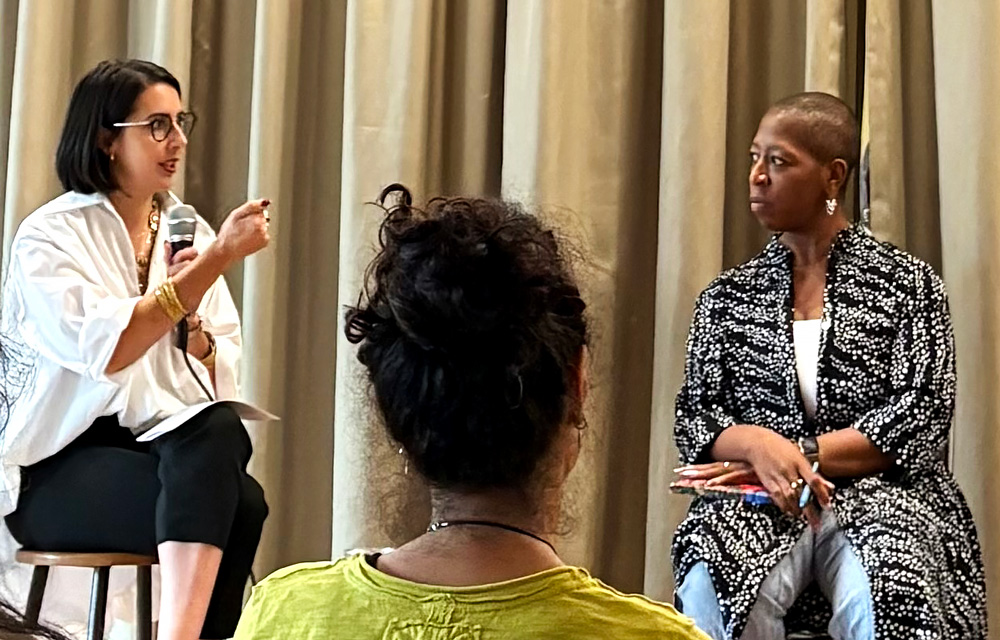
The Climate Week NYC panel “Science, Democracy and Climate” explored the complex connections between climate science and politics.
As climate science continues to be suppressed and ignored by politicians, remaining silent is no longer an option. Speakers at a recent Stand Up for Science event said that political activism and advocacy may be the key to solving the climate crisis.
“The path forward is taking ownership of our politics…” said panelist Dr. Michael Mann. “The obstacles are not physical, they’re not technological, they’re political.”
Stand Up for Science (SUFS), a science-focused American political advocacy organization, was founded in 2025 after the Trump administration significantly reduced the funding of federal science programs. Through volunteer activism, outreach campaigns, and public education, SUFS works to protect scientific integrity from political interference.
The discussion took place on Wednesday, September 23rd in Midtown and featured two speakers: Dr. Ticora Jones from the Natural Resources Defense Council, an international nonprofit group for environmental advocacy, and Dr. Michael Mann from the University of Pennsylvania. Dr. Colette Delawalla, CEO and Founder of SUFS, moderated the conversation.
Empower Women
Environmental Leaders Say Women are the Key to Combating Climate Change
An all-female climate panel came together to discuss women-led solutions toward the phase out of fossil fuels.
By Gianna Clarke
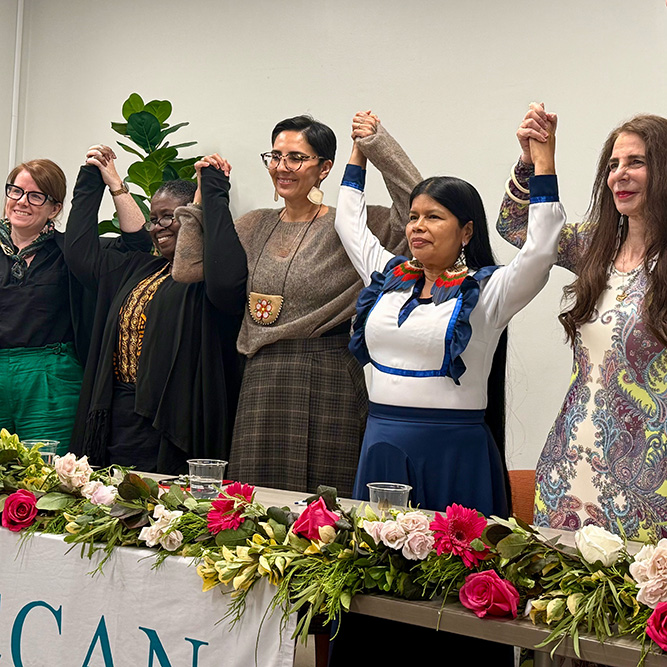
Climate related disasters continue to devastate communities. Frustrated by the lack of action from world leaders to implement policies that will work to solve the climate crisis, female climate leaders came together during Climate Week to push for real action.
“The winds, the thunder nation, the gentle female rain that will sweep away a dam, that’s power,” said Casey Camp-Horinek, environmental ambassador for the Oklahoma Ponca Nation. “Human-made power is just pitiful.”
Camp-Horinek spoke to a crowd of about 30 people at a Climate Week event hosted by the Women’s Earth & Climate Action Network. During the three-hour session, entitled
“Women Building a Resilient World,” 11 speakers discussed the importance of women to be a part of climate solutions.
Commute Conundrum
The Climate Cost of Separating Affordable Housing from Transit
During Climate Week NYC, panelists warned that placing affordable housing far from jobs and public transportation can raise costs and carbon emissions.
By Esther Jihye Yoon
Where people live shapes how they travel. In cities around the world, placing affordable housing far from jobs and public transportation can leave low-income residents with longer, more expensive commutes—and increase carbon emissions.
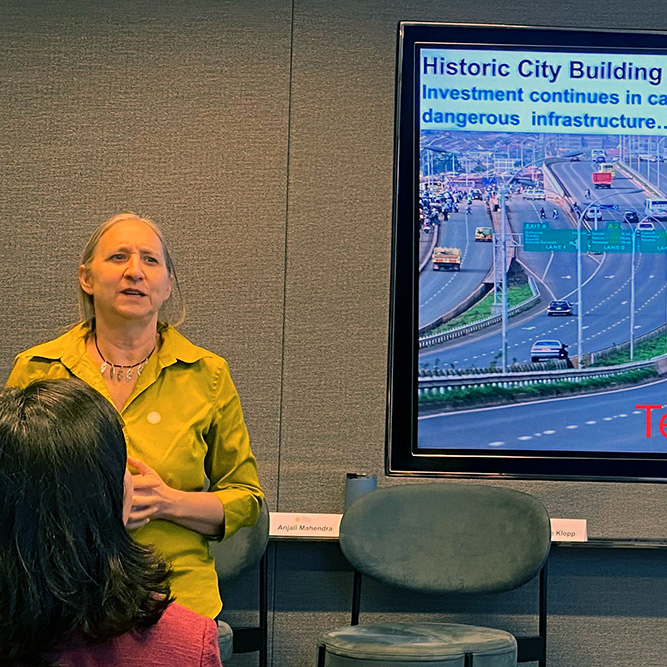
That was a key message from four panelists at “Popular Transport, Low-Cost Housing and Climate,” a Sept. 23 Climate Week event at the World Resources Institute in Manhattan.
Low-income and vulnerable communities often face greater exposure to climate hazards while having fewer resources to adapt, said Anjali Mahendra of the World Resources Institute, a global research nonprofit. Yet their housing and transportation needs are frequently left out of climate planning.
Low-income commuters largely depend on walking, cycling and public transportation, according to a 2021 WRI report co-authored by Mahendra. But as much as 95% of urban road space is typically allocated to cars and trucks, leaving less space and investment for the transportation options those residents use most.
Civil Disobedience
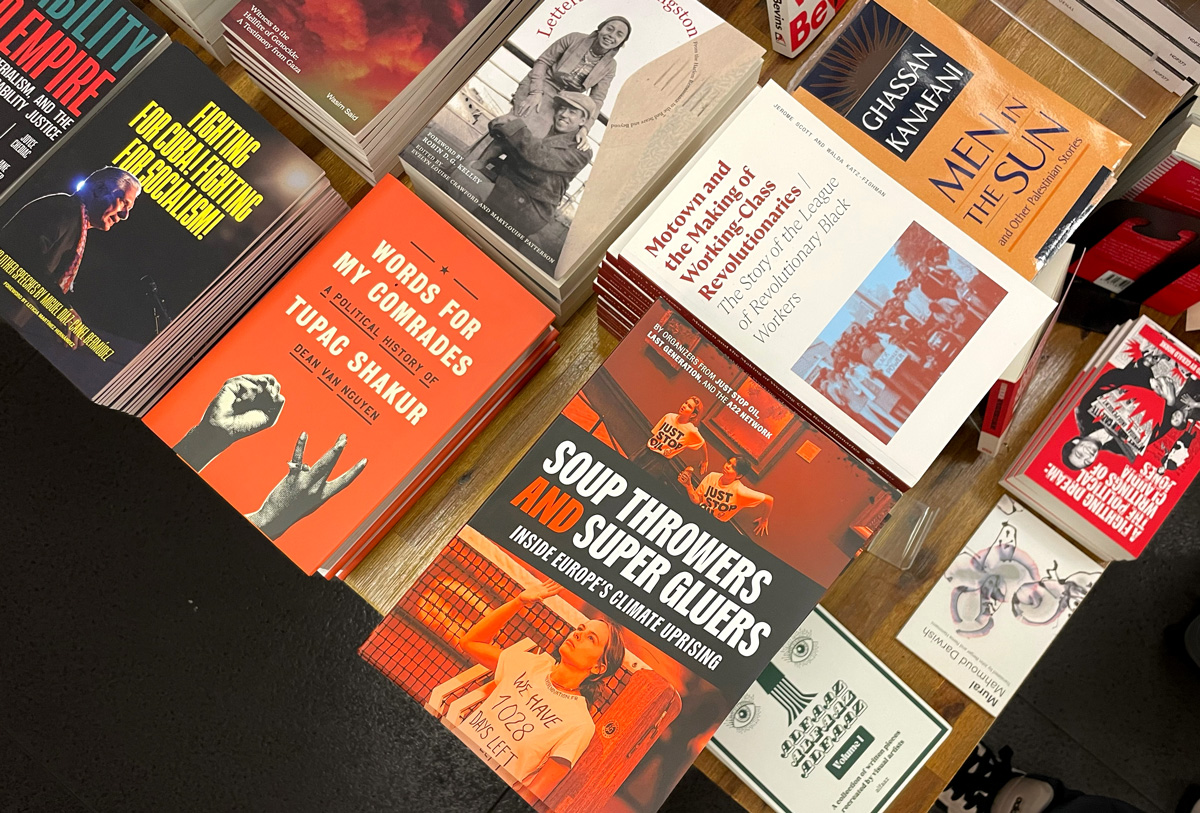
Soup-Slinging Climate Activists Go Intercontinental
Environmental group The A22 Network begins U.S. book tour.
By Suchita Thepkanjana
They have thrown soup at a Van Gogh painting, tied themselves to tennis nets, and blocked roads all over Europe in the name of climate activism. Now, they are hoping to sow similar seeds of civil disobedience in the United States.
On 23 September, the A22 Network, a climate activism coalition, hosted a discussion and read from their book Soup Throwers and Super-Gluers: Inside Europe’s Climate Uprising. The Climate Week event, held at the People’s Forum in Manhattan, was part of the first leg of their three-week U.S. tour, during which they said they plan to network with local environmental groups.
“I can personally feel that you’re fighting a struggle here right now,” said Carla Hinrichs, A22 Network member and book co-author, that is “deeply connected with the struggles in Europe.” Colleagues Henning Jeschke, Chloé Bertini, and Thibaut Cantet echoed the need for more civil disobedience activism networks in the U.S.
Resilience Is A Curse
Communicating Climate Change Requires a Language People Know
As Indians experience climate emergencies, climate communicators search for a way that connects those experiences in a language most will understand.
By Chandra Verma
Floods and droughts return year after year to the same communities in India. In Bihar, where floods occur every year along the Kosi River, and droughts affect communities in central and southern India, people learn to live around them. Most have no choice.
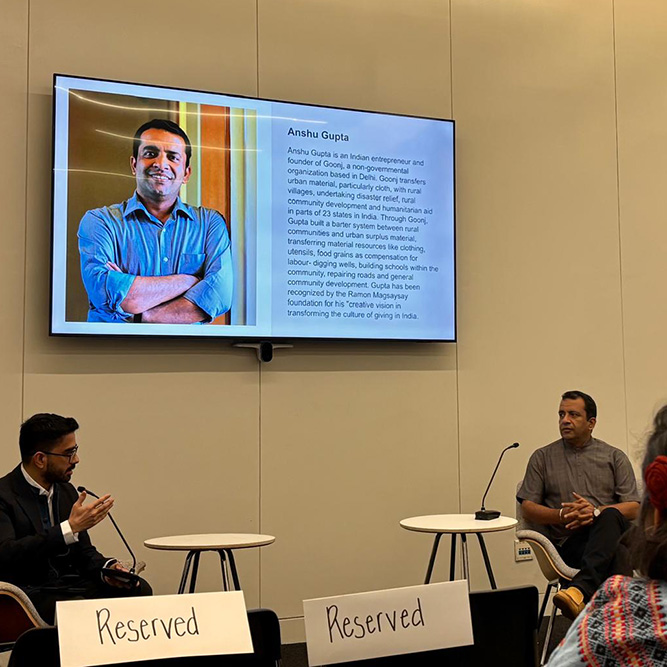
Which is why Anshu Gupta, founder of Goonj, an India-based humanitarian non-profit responding to climate emergencies such as floods, heat waves, cyclones, or droughts, does not like the word “resilience.” To him, it conceals the reality that people suffering from the impact of climate change have no way to relocate or to change their circumstances.
“Resilience is a curse,” Gupta said. In flood-prone regions of Bihar, he has met families having to relocate to the roadside every monsoon, because of the excessive flooding, and calling them resilient can obscure the harsh truth that these families have limited alternatives.
Gupta was one of the speakers at a Climate Week event, “What Moves Indians: Communicating Climate for Resilience & Livable Cities,” held at the American Red Cross. The panel focused on how climate change is discussed in India.

Shade, Water and Mist
New York City Looks to Continue Pop-Up Cooling Program
After expanding the program this summer, the city is seeking funding to keep seven outdoor cooling stations operating.
By Harim Nduka-Irabor
Sometimes, city pop-ups turn into longer-lasting programs. That’s the case for pop-up cooling stations. On Sep. 23, officials from the city’s emergency management and health departments discussed the role new cooling stations can play during extreme summer heat, which contributes to close to 500 premature deaths in New York City every year.
Traditional cooling centers, such as libraries and community centers, offer air-conditioned spaces. Newer pop-up stations provide outdoor relief with shade, water and misting fans.
The city piloted two of these pop-up stations in 2025 and expanded the program to seven this past summer. “There was a demand,” said Heather Roiter, Emergency Management’s deputy commissioner for planning and resilience.
Roiter and others from her office and the city’s health department spoke about the new cooling stations at a Climate Week event held at Emergency Management’s Brooklyn headquarters.
Urban Greening
Community Gardens Try to Combat Climate Change One City Block at a Time
Brooklyn is growing greener, one block at a time.
By Lena Maasen
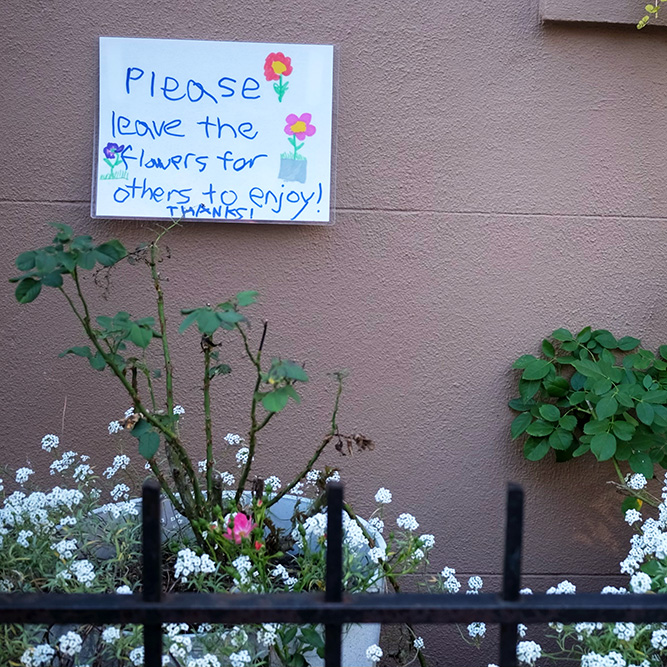
A sign hung above a garden full of flowers on a block in Brooklyn. By Lena Maassen
For four Brooklyn community gardeners, the seeds they have planted over the last decade have grown into something big: a way to bring neighbors together and inspire them to care for the environment around them.
As part of Climate Week, the Brooklyn Botanic Garden invited four community gardeners to discuss what New Yorkers can do to protect the planet. The “Brooklyn Greening Heroes” panel featured Debra Sweet, Julia Charles, Maria Garrett and Althea Joseph. Their work across Brooklyn ranges from native plant gardens and colorful window boxes to restoration of a nature preserve and neighborhood tree bed work.
“Our planet is turning brown, but we [are] gonna make it green,” said Maria Garrett, who has worked to protect and restore the Fresh Creek Nature Preserve in Canarsie for over 20 years. “We have to do this, and we have to do it together.”
“You want daffodils? I will plant your daffodils,” she said.
Gardening is about the “knowledge and freedom to garden,” said Sweet, whose Crown Heights block won Brooklyn’s greenest block in 2025.
About the author(s)

Columbia News Service